Towards the middle of this lecture, I ask you to pause and watch a video work. Here it is: http://www.inhabitants-tv.org

This entry is licensed under a Creative Commons Attribution-NonCommercial-ShareAlike 4.0 International license.
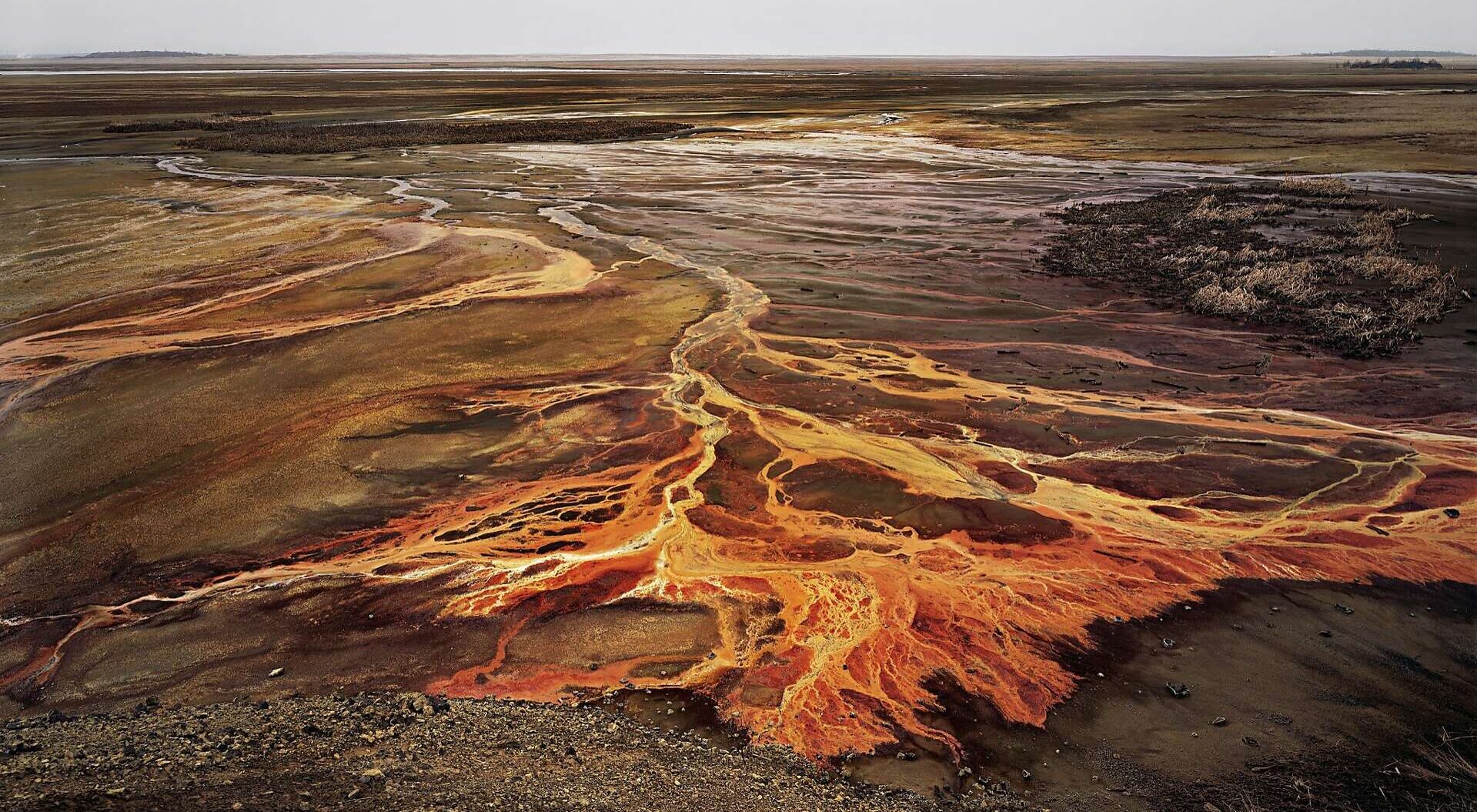
Towards the middle of this lecture, I ask you to pause and watch a video work. Here it is: http://www.inhabitants-tv.org
This entry is licensed under a Creative Commons Attribution-NonCommercial-ShareAlike 4.0 International license.
You must be logged in to post a comment.


One idea that kept coming up in both the reading and lecture was the belief that technology can fix almost anything. The discussion around geoengineering challenges that assumption by asking whether changing the environment on a massive scale is really solving the problem or just creating a different set of risks. The reading explains that geoengineering is often presented as a way to “save the world,” but it also raises concerns about who has the authority to make decisions that could affect the entire planet (pp. 137–141). Instead of focusing only on technological solutions, the author encourages readers to think about the political and social systems that contribute to environmental problems in the first place. This argument appears throughout the discussion of geoengineering and the idea that large cale interventions may not address the deeper causes of climate change. The reading also questions whether relying on technology can sometimes distract from addressing issues such as consumption, inequality, and environmental justice that helped create these problems to begin with.
I also found the concept of conflictual futurisms interesting because it recognizes that people do not all imagine the future in the same way. The reading argues that there is no single vision of the future that works for everyone because people’s experiences are shaped by different social, economic, and political realities (pp. 138–140). What may seem like progress for one group could create new challenges for another. This idea connects to the lecture’s discussion about power and responsibility, particularly when environmental decisions are made by governments, corporations, or institutions that may not represent the interests of everyone affected.
The reading’s critique of organizations such as the Breakthrough Institute and the Ecomodernist Manifesto further highlights this concern by questioning whether technological progress and economic growth alone can create a just and sustainable future (pp. 142–145). Rather than assuming that innovation alone can solve environmental problems, both the reading and lecture encourage a bigger conversation about who benefits from these solutions and whose voices are included in shaping them. In that sense, creating a sustainable future requires more than scientific advancement it also requires careful consideration of equity, responsibility, and the diverse ways people experience environmental change.
Lastly, I started thinking about the rapid growth of artificial intelligence and its environmental impact. AI is often presented as a tool that can solve complex problems and make our lives easier, but it also requires enormous amounts of energy and water to power and cool the data centers that support it. This reminded me of the reading’s discussion of geoenineering because both are examples of technologies that are promoted as solutions while also creating new environmental concerns. It made me question whether technological innovation alone can create a sustainable future or if it sometimes shifts environmental costs elsewhere. Similar to the arguments in the reading, I think it is important to consider not only the benefits of these technologies but also their long term environmental consequences and who is most affected by them.
One idea from the lecture that really stayed with me was the question of whether humans should have the power to control the climate. I found the discussion about solar radiation management especially interesting because, at first, it sounds like a smart solution. If the planet is getting too hot, why not find a way to reflect some of the sun’s energy and cool the Earth? But the more I thought about it, the more I realized that geoengineering is not only a scientific question. It is also a political and social justice question.
The lecture explains solar radiation management as the idea of releasing sulfate aerosols into the atmosphere to reflect the sun’s rays. The technology could potentially cool the planet quickly and is considered relatively inexpensive. However, the professor also explains that this solution could cause droughts and reduce precipitation in parts of Africa and South Asia. This made me question what we really mean when we say we are trying to “save the world.” Whose world are we saving, and who is allowed to suffer in the process?
This connects to the idea of environmental justice and also to “To Save a World” by T. J. Demos. What interests me is the language of “saving.” Saving the planet sounds positive and almost heroic, but it can hide questions about power. A small number of scientists, governments, or wealthy people could potentially make decisions that affect billions of people. The people experiencing the worst consequences may have very little control over the decision. To me, this feels like another version of colonial thinking, where powerful countries decide what is best while poorer countries are expected to deal with the consequences.
I also found the connection between geoengineering and the earlier land artworks in the lecture interesting. Artists like Robert Smithson physically moved and changed the landscape, while later geoengineering ideas imagine changing the atmosphere itself. The scale is completely different, but I think the same question exists: Why do humans constantly believe that nature is something we need to control? The lecture discusses how seeing Earth from space in 1968 created a feeling that we were all connected, but it also created the dangerous idea that Earth could be viewed as an object that humans own and manage.
For me, geoengineering seems like treating climate change with a giant Band-Aid. Solar radiation management may lower temperatures, but it does not stop greenhouse gas emissions or the systems that created climate change. Instead of changing our behavior, we are searching for another technology that allows us to continue living the same way. I think this is what makes geoengineering so uncomfortable to me. Maybe the biggest problem is not that humans do not have enough technology to control nature. Maybe the problem is that we already believe we have the right to control it.