One idea that stood out to me from the lecture is the gap between knowledge and action. The professor presents numerous examples demonstrating that nonhuman animals possess traits often considered uniquely human: crows mourn their dead, chickens show empathy, capuchin monkeys respond to unfair treatment, and orcas pass knowledge across generations. These examples challenge the assumption that humans occupy a completely separate category from other animals. Instead, the lecture suggests that the boundary between human and nonhuman life is much more porous than we often imagine.
What interests me, however, is a question the lecture raises indirectly: if we already know all of this, why has so little changed? Scientific evidence about animal intelligence and emotion has grown enormously in recent decades, yet industrial animal agriculture continues to expand. Billions of animals are still treated as commodities, and the environmental consequences remain severe, including pollution, deforestation, greenhouse gas emissions, and biodiversity loss. Knowledge alone does not seem sufficient to transform behavior.
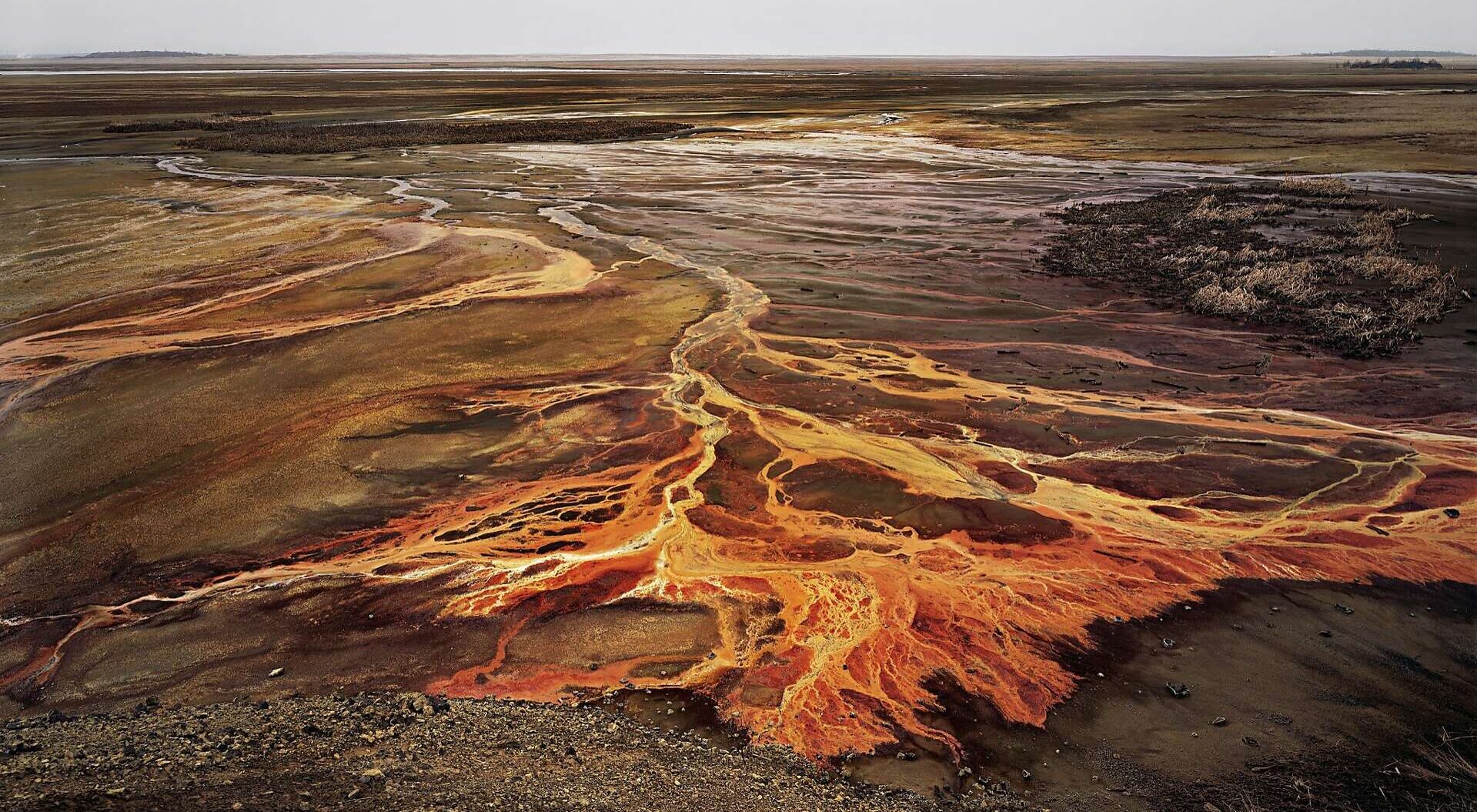
This is where I found Braddock’s discussion of activist art especially useful. Rather than simply providing information, activist artworks attempt to reshape perception. They make systems visible that are usually hidden from everyday life. The lecture’s discussion of Mishka Henner’s drone photographs of Texas feedlots is a good example. From the ground, industrial animal agriculture is largely invisible. Most people never see the enormous waste lagoons, the scale of confinement, or the environmental damage associated with these operations. Henner’s aerial perspective reveals a landscape that is both visually striking and disturbing. The images transform statistics into something that can be seen and felt.
What makes these photographs powerful is that they operate through a kind of contradiction. From a distance, the images can appear almost abstract, resembling paintings or geometric patterns. Yet once we understand what we are looking at, the beauty becomes unsettling. The aesthetic experience draws us in, only to confront us with the realities of industrial meat production. This strategy reminds me of Braddock’s argument that activist art does not simply communicate facts; it creates new ways of seeing political and environmental problems.
I would argue that the lecture ultimately demonstrates the importance of art alongside science. Science can tell us that animals experience empathy, culture, and individuality. Art, however, can challenge the habits of perception that allow us to ignore those facts. The real issue may not be a lack of information but a failure of imagination. Works such as Henner’s photographs encourage viewers to see animals not as anonymous units within a system but as participants in a larger ecological and political world. In that sense, activist art becomes a bridge between knowledge and responsibility.
This raises an interesting question for discussion: if scientific evidence about animals has existed for decades, is the primary role of environmental art to provide information, or is it to transform the way we emotionally and ethically relate to what we already know?
Thanks for your thoughtful comment, Ena. What an interesting way to frame things, i.e. the difference/gap between knowledge and action. You’ve really thought this through in a compelling way in this post.
A lot of thoughts came up for me during this lecture. I was raised vegetarian, and I never ate meat intentionally until I was almost 17. My friends cooked me a 3-day marinated grilled chicken breast over basmati rice. Maybe three times a week, I have this meal in some form. But what does it cost? Some shocking statistics come to my attention now and then, and I think to myself how selfish it was for me to become carnivorous. This lecture brought up some figures that hurt to see, like 70% of water is being used exclusively to farm livestock. Alost 15% of greenhouse gases are from the meat industry. This is not even to mention the hundreds of billions of animals slaughtered just on the land every year because we humans feel our souls are more important than our fellow earthlings. I just wanted to try new foods and experience the fullest extent of people’s culture by sharing meals.
This draw toward connection was reflected in a moment during The Great Silence, when the narrator describes humans as having a “desire to make connection… so strong that [we’ve] created an ear capable of hearing across the universe.” But why must we listen out into the ceaseless void of the Fermi Paradox? The isolation we feel as a planet is not only acceptable, but untrue! It should be easy for us to accept our solitude in the universe; nobody has shown up, and that might not be a bad thing. Not only should we simply accept this fact of life, but be incredibly grateful for it. We live in the one Goldilocks zone we know of, this perfect balance between burnt and frozen, and Earth happens to hang directly in the middle and fosters all of life as we know it. Furthermore, we are not alone. We (used to) exist in harmony with our fellow earthlings, and cases like dolphins communicating pregnancies show us that there is still an indescribable, natural bond with these creatures. Now, we have industrialized and capitalized on their bodies and their extermination. So how do we grapple with all of this?
One of my favorite pieces of anti-anthrocentrist art is The Smiths’ Meat is Murder. Their 1985 album uses a double-entendre to criticize war and the meat industry at once, drawing parallels between those slaughtered in Vietnam and pigs in a slaughterhouse, and how the powers that be choose who gets to live. This is done in many moments on the album, but mostly on the title track, when samples of slaughterhouse ambiance are used. While on tour for the album, they played footage of animals being killed to accompany the album’s themes. All of this being said, it’s a deep and hearty f*ck you to Morrissey for somehow deciding that animals deserve rights, yet Black and Brown immigrants to the U.K do not. This plays into earlier conversations about political ecology and our impact as humans on the environment. How can we wage war on animals and not expect it to harm us? How can we wage war on each other and not expect it to harm the environment?
It’s been forever since I’ve listened to The Smiths, perhaps I should revisit them this summer – though, like you, I was really disappointed and put off by Morrissey’s later antics and reactionary views. Also, happy that you liked The Great Silence!
Animal exploitation has become such an essential part of our society that it is integrated into our culture and our way of life. I wonder if we can ever have a moment in our history where we weren’t dependent on other animals. Even before agriculture, we used to rely on other animals when we were living in nomadic societies. Once again, there is something biblical about humans separating themselves from other animals. It seems like in Christianity, a human was the final product of the animal kingdom created to rule over it.
As someone who has a pet, it makes a lot of sense to me that my cat has a personality. She is very unique to me. Every day, I observe her using her intelligence. Yesterday, she used her weight as leverage to push down one side of the cardboard box, lifting the other side to get inside. I wouldn’t want anyone to eat her. Chickens probably don’t want to be eaten, either. It’s pretty upsetting to think about, considering that there recently was a resurgence of the “carnivore diet.” Not only is it not very good for the environment, but also, the health benefits of it are largely false. That’s what I was thinking when I saw “How to Build Cathedrals” by Cildo Meireles. It touches on so many aspects of colonialism at the same time: settler colonialism, the spread of new diseases by European settlers and their cattle, and the reshaping of the landscape to allow all of this new agriculture. It’s crazy to think that there used to be no cows in Marica’s, and now beef is almost like a national symbol. I’m not from the US originally, and I don’t think people from my part of the world like to consume beef as much, despite still being a heavily meat-eating culture. Another thing that this artwork reminded me of, partly because of the amount of bones, but also because of the catholic spirit of the work, was Santa Maria della Concezione dei Cappuccini. Or just the Cupuchin Crypt, it’s a bone chapel in Rome. I saw it a few years ago. The interiors of it are decorated with the remains of approximately 3700 humans. The display is meant to be a silent reminder of our fleeting life on Earth and mortality. In turn, “How to Build the Cathedral” is a reminder of the time of colonialism and exploitation.
Great analysis of Meireles’s installation, Ana. I wrote on it for my essay “Zoonotic Undemocracy” in October journal a few years ago, check it out if interested!
Before this lecture, I never really stopped to think about how much of our identity as humans is built around the belief that we are fundamentally different from other animals. As I listened, I kept coming back to the same question: what actually makes us so different? The more examples the professor shared of animals showing empathy, intelligence, and complex social behaviors, the harder it became to see that line as clearly as I once did.
I think a lot of us grow up believing that humans are different because we are more intelligent, emotional, or socially complex. But the lecture challenged that idea. The more examples that were presented, the harder it became to ignore the similarities between humans and non-human animals. It made me wonder if the real issue is not whether animals are like us, but why we need them to be like us before we consider them worthy of care and respect.
The reading connected to this idea in an interesting way. Braddock discusses how activist art and photography can make us see animals differently. What stood out to me was the argument that art can reveal things that are often hidden from everyday life. We may hear statistics about animal agriculture or environmental destruction, but photographs and artwork have the ability to create an emotional response that facts alone sometimes cannot. They encourage us to see animals as individuals rather than as products or resources.
Something else I kept thinking about was anthropocentrism. Humans tend to view ourselves as the center of everything, but the lecture made me question whether that perspective limits our ability to understand the world around us. If animals are capable of empathy, communication, learning, and even forms of culture, then maybe humans are not as separate from nature as we often imagine. Instead of seeing ourselves above other species, perhaps we should see ourselves as part of a larger community of living beings.
Overall, the lecture left me with more questions than answers, which I think is a good thing. It challenged me to think differently about intelligence, empathy, and what it means to be a person. More importantly, it made me reflect on how the way we see animals influences the way we treat them and the environments we share.
Hey Stephanie, you brought up points about how we perceive animals and how we are taught to perceive animals. Humans generally start thinking or acknowledging animals intellect when it starts to match that of ours. Humans don’t go the lengths to trying understand non-human animals and their languages or overall way of living. Despite proof of them being as complex as humans, there is this continuation of separation. Humans can settle down on a belief of other life on another planet and deems them of a higher intelligence despite little knowledge on them. Yet, the animals on the planet we know are absolutely here and actively able to socialize, communicate, and even have similar social behaviors as us are thrown to the side and their homes are invaded by us.
This week’s lecture slightly caught me by surprise. From the beginning I started to see the different images and listened. What immediately stood out to me was the Orca who was mourning the loss of her calf. While it was very heartbreaking to even think of, it definitely made me realize how all living things mourn yet we all mourn differently. This immediately set the tone for me. The more I watched and analyzed how animals have their own traits and know how to adapt to the environment.
As I started the readings for today, I noticed a consistent theme on visibility. That is to say, “nonhuman persons” or animals as we see them. Yet, as I mentioned in the paragraph above, there is a lot more than we may notice about animals. Their traits, their characteristics. It is essentially what makes us humans; humans.
A combination of the video lecture and the readings, helped give a new meaning to the word “artisvism” for me. While we consistently read articles or watch videos on animal cruelty, it is different when artists use their art form as mediums to almost speak for the “voiceless”, in this case the animals. Yet this does not necessarily change much in my opinion. This is because the message of many of the works of art that display slaughterhouses for example does not necessarily mean that it impacts everyone the same way. While we might feel sad or empathic it does not mean that we as humans will stop what we do.
The images that depict animals with relatable traits such as human emotions are a way that abstract art can create a sense of emotion but I think many of us as humans will not just start to be different onwards animals. It is definitely a tough pill to swallow because this does not mean that we are careless, or mean. There are definitely many things that we as humans have done throughout history that takes a lot of reflecting on.
While the many works of art from the lecture display the consequences that animals face from our actions, there is a reason why many of these actions happen behind closed doors. Is it because we are humans and while we are able to understand that it hurts to see animals suffer we try ti make sure not everyone sees the process? Or what about littering and how that affects the ocean, our streets etc.
There are always going to be consequences and art and visibility will help raise concerns. But is it more than just addressing what we do wrong and also take into consideration our fellow living things?
I really enjoyed this lecture about animals, the introduction of the video sharing facts about non-human animals and how they navigate through things like socializing, communication and even their perception of beauty, had me hooked. I genuinely enjoy learning about non-human animals and how they live their lives differently to human animals and how they interact with our systems. Things such as numbers and games being used by the bonobo and the pig were interesting to see. I have seen monkeys being capable of doing things like that but a pig was completely far from my mind. It made me think about this thought I had previously about how humans continue having a mindset that separates non-human animals and human animals.
The piece called The Great Silence was a great way to provoke thoughts about non-human animals and how us human animals perceive them. I did end up watching the rest of the video and enjoyed it. The story is told from the perspective of a Puerto Rican parrot and their home is invaded by a telescope that is causing the verge of their extinction. The use of the telescope is for communication but not with non-human animals, with extraterrestrial life that may or may not exist. That’s the kicker to it, humans wanting to communicate with life that may not even exist while simultaneously having non-human animals to communicate with as they have proven that they can have the capability to communicate with human animals. I question, why is that? Why do humans go so far and beyond to keep us separate from non-human animals? Why does life from another planet begin with a highly respected view of higher intelligence than those who we share a planet with and we barely know much about them? It all seems very bizarre that we behave that way. Especially when non-human animals such as Alex that were mentioned in the video are capable of communication and grasping concepts at a deeper level.
Towards the end of the film, the viewer is told how extinction affects more than just the population itself. It affects everything that makes their lives complete such as tradition, language, and rituals. Preservation of those things only seem to apply to Humans but not to non-humans. It surprised me at the end that the story’s mood did not change to anger from the parrots. The ending goes on to put it in a way that humans did not do it maliciously, they just did not notice the harm they were causing with the telescope. Will we only pay attention when it is gone and that’s the best way to grab our attention? Only then is it worth preserving remnants of the non-human animals for view?
I really enjoyed this lecture, I care deeply about animals so learning about their intelligence/ specific quirks and the artworks regarding their mistreatment was poignant. I first learned about the factory farm industry in middle school, I think 6th or 7th grade, watching the film Food, Inc in my Social studies class and after that I became vegetarian. TheToronto Pig Save where Anna Kranjnc offered water and comfort to pigs bound for slaughter- was a gentle kind of activism that was beautiful, devastating, and intensely human(in the emotional sense).
I became vegetarian for environmental and ethical reasons. I didn’t want to participate in the torture of animals- and their lives were just as worthy of respect as ours, but I think my view was still that humans are separate from animals. Recently, my relationship and regard for animals has changed.
In the lecture, learning about the orca mourning her dead calf was heart-wrenching. Learning how octopuses will decorate their dens was so cool too. Just some examples of how non-human animals have culture, language, sociability, tools, empathy, and distinct personalities, just like humans. The book Braiding Sweetgrass has added to this mindset shift.
Here are two quotes that relate well:
“In the western tradition there is a recognized hierarchy of beings, with, of course, the human being on top— the pinnacle of evolution, the darling of Creation— and the plants at the bottom. But in Native ways of knowing, human people are often referred to as ‘the younger brothers of creation.’ We say that humans have the least experience with how to live and thus the most to learn—we must look to our teachers among the other species for guidance. Their wisdom is apparent in the way they live. They teach us by example. They’ve been on this Earth far longer than we have been, and have had time to figure things out.”(9)
“It is said that our people learned to make sugar from the squirrels. In late winter, the hungry time, when caches of nuts are depleted, squirrels take to the treetops and gnaw on the branches of sugar maples. Scraping the bark allows sap to exude from the twig, and the squirrels drink it. But the real goods come the next morning, when they follow the same circuit they made the day before, licking up the sugar crystals that formed on the bark overnight. Freezing temperatures cause that water sap to sublimate, leaving a sweet crystalline crust like rock candy behind, enough to tide them over through the hungriest time of year.”(67)
I also think, as she mentions, that in Western science there’s a lot of hierarchy and in my opinion hubris. Animals are studied in a way that assumes we as humans understand how or why they live because they’re seen as “simple” creatures. But in fact how is a mouse, an ant, or pig dumber than me? We are measuring intelligence through a human focused lens- comparing other animals’ skills to the skills we excel at. I can’t hear or sing multiple notes in the way a bird can- nor scurry up a tree the way a squirrel can.
Maybe there’s an assumption that because we(humans) eat meat- there is a connection between hunting/’outsmarting” these animals in order to kill them- and if they were of equal or higher intelligence they wouldn’t be killed? But that’s an extremely cursory assumption, perhaps common in America to justify harm to others. When violence across the board inter-species or cross-species is not always about wits, it is also about ethical boundaries your willing to cross.
I was also really intrigued by the film mentioned in the reading O Peixe (The Fish) by Jonathas de Andrade. The fictitious ritual aspect was super thought provoking- I still don’t fully understand the piece but would like to think about it more.
Thanks, Zea, I also don’t know all that much about Jonathas de Andrade’s work, besides what’s mentioned in the reading. I’ve looked for it online, but unfortunately there are only snippets.
Mishka Henner’s satellite aerial photographs of feedlots stopped me in a way I didn’t expect. There’s something about the scale they reveal lagoons of waste and animals spread across the land that feels impossible to grasp any other way. The aerial picture makes what can not be seen visible because maybe we can’t see the full picture, and I think that’s exactly the point. Without that altitude, the horror is a bearable thing to look at. From the ground, a feedlot is a something that passes by every day.
This made me think about the role aerial photography plays in photojournalism. Photographers like Mario Tama, a personal favorite of mine, a Getty Images photojournalist, have occasionally used aerial perspectives, and ground-level coverage can’t fully tell. I recommend you look some of that up. There are also real ethical and legal frameworks around this kind of work, airspace regulations, privacy considerations, the question of who has the right to document what nd I think those guardrails matter, but at the same time find them interesting to work around and think about while making a photograph. Responsible aerial photography isn’t just about getting the shot; it’s about telling a story. Henner’s workaround, shooting from high enough altitude to stay legal, is itself a kind of statement that the truth is still there and no one can challenge it.
Aerial and drone photography, when practiced responsibly, has a unique power in this context: it refuses the invisibility that these industries depend on.
A piece of artwork that really stood out to me from this week’s lecture was Mishka Henner’s 2013 aerial drone photographs of feedyards in Texas. Seeing the huge gray-brown plots of land dotted with tiny cows next to massive pools of murky green or blood-polluted water really helped conceptualize the scale of both how much land and water animal agriculture takes up on our planet and also how much pollution it leaks out onto the surrounding environment. According to the lecture, animal agriculture takes up 75% of land use, 60% of crops, and 70% of freshwater on the whole planet, which is a huge amount but hard to really imagine and think about the impact of without seeing these photographs. There was also a point made in the lecture about how these resources such as crops and freshwater could be used instead to help the poorest people in the world that don’t have access to freshwater or food — and this made me think about how water scarcity or food scarcity is an inherently man-made issue for two reasons: 1) climate change and pollution causing the destruction of environments in third world countries that were previously resource-rich and able to sustain humans for tens of thousands of years, and 2) we do have enough water and food for everyone, but corporate greed and certain political interests benefit from withholding resources from others (& in turn benefit from continuing to pollute and destroy the ecology of poorer countries.)
Another idea that stood out to me from the lecture and readings was the idea of thinking non-anthropocentrically — and not just thinking about it conceptually, but also reflecting that in the language that we use. There was a point in the slide about non human animals and the environment which mentioned “the trillions of earthlings that call the oceans home,” and it made me pause for a second and read it twice. I realize that I had an internal bias of earthling = human, and had never encountered that word used differently, to mean any form of animal life on earth. But of course non-human animals are earthlings, and fish, and whales, and crustaceans and worms, and all other forms of life that we share this planet with. Other examples of this in the lecture was the use of words like “bodies,” and “immunocompromised” when speaking about non-human animals in factories, where it made complete sense but I also got struck with a sense of realizing we usually reserve this language to only talk about people.
This dichotomy of human vs. non-human animal and internal anthropocentrism that most people have is something that Anita Krajnc intentionally challenges and tries to break down in Save Movement Photography, which was highlighted in the reading “Activist Abstraction” by Braddock. Braddock talks about her photograph of a sow inside a transport truck, cropped to focus on her eye looking at the viewer through a hole in the crate, and how it appeals to a sense of being human.
The first thing that came to mind to me during this lecture is this bizarre interaction I recently had with a flock of blue jays. Perhaps less bizarre, more eye opening. I completely agree that this separation between humans and animals is false and the pedestal given to humans when it comes to being “intelligent life” should be mitigated. To get back to the story about the blue jays, a few days ago a stray cat in my yard and had caught a blue jay, my sister spotted this and went to quickly help release the bird but as this occurred, simultaneously a flock of other blue jays appeared distributed amongst surrounding trees in the yard and they just began to scream in unison. It was almost unbelievable, but it was clear that they had come to help their friend/loved one out. They could see the bird was in danger and were making sure to be there and perhaps raise awareness to the situation, warn the cat to stay away, or simply provide moral support. To let the bird know that it wasn’t alone and quite literally had a village to fend for it. I thought it was beautiful and also heart breaking to kinda witness their pain for their community members. Eventually we were able to release the bird and it flew away before we could provide any medical care. The following day the flock returned again in the yard and began the same calls again around the same time as the day before. It really just made me wonder so many things, had the bird not made it? Are they mourning their loss? Are they here to avenge the harm that was done? It was honestly really disheartening to see their distress and it was clear how strong the empathy was between their community. Perhaps even more so than humans, actually definitely more so than humans. I remember hearing in the news not too long ago of this man who had gotten trapped in an escalator and was choked to death by his garment, the camera footage showed dozens of people going past him, not one person had stopped to make sure he was okay or call for help…Too compare that situation to the encounter with the blue jays, I think is embarrassing for human kind.
Other things mentioned in the lecture were also really informative, especially The Great Silence and learning about Alex, I find that so cool and not surprising at all. We’ve definitely been fed some sort of propaganda about how superior we are to other living things around us…political ecology. Also learning about how jarring the pools of blood/waste are in these cattle sights, with south america having the largest sights… while simultaneously being home to the lungs of earth. The murders of the activists was another unfortunate reality to be made are of but there really are these difficult systems set up in place to keep these self-destructive loops to keep running. Not sure if self-destructive is even the right word here because it isn’t an equal distribution of contributions to these issues.
I enjoyed reading about that blue jay, Aisha. Very interesting and so nice to see how you speculated on the situations with an open mind. Maybe you could have connect this story a bit more to Alex and the Great Silence, but happy to hear you liked that work, it’s one of my favorites.
I grew up going to a summer camp on a sustainable farm. Everything was used. Scraps were either food for the chickens or compost. We had meat only for the Fourth of July. We were told the cow’s name was Charlotte and that we should thank her for allowing us to eat. All this goes to say is that I believe I am closer to the issues of farming and industrialized meat production than the average New Yorker. I am a staunch believer that our barbaric practices should be rectified, and I am glad organizations like Save Movement are raising such awareness about how farming practices deplete the land and the true cost of meat.
Something that irritates me with these organizations is that it does not mention the full extent to which we must be responsible for what we have done to our ecosystems. Many advocate to save the animals, but not many advocate to end their lives as the price of saving our environment. It is little mentioned that many animals must die for our hubris (and European Colonialism). Our global trade network has introduced countless nonnative species to environments that wreak havoc on local ecosystems. Few people know that the elegant swan, a symbol for love and prosperity, routinely murders wood ducks and is a highly invasive European species that disrupts most North American landscapes it sets foot in. Calling for the restructuring or dismantling of the meat industry in the same breath as the death of swans does not a popular headline make.
Another example of this is the numerous cat colonies that humans proliferate. Cats are considered domestic animals that no longer belong in wild ecosystems. Any cat that does not live in an apartment is feral. Cats do retain many wild instincts, however. Notably, their instinct to kill birds, animals that are dying off in greater numbers than other species. Some may have heard that TNR (trap, neuter, return) is an effective method for controlling feral cat colonies, but this method proves ineffective at reducing the number of feral cats. In order for TNR to start decreasing a population, 70% of cats must be sterilized, which even humane societies concede to be extraordinarily difficult to do. I have a cat at home whom I love dearly, but I agree that many cats sadly do need to be euthanized if we wish to restore balance in our ecosystems.
All of this ignores the fact that plants are far more sentient than humans once thought, and more evidence comes out every year to support this. Trees have been shown to give extra nutrients to their seedlings underground. The smell grass makes when mowed is actually it screaming out to nearby patches that there is an imminent threat. From a farming perspective, the water cost of nuts is higher than that of meat. Because animals have a face and can cry out in a way our ears understand, we value their lives over plants.
It is simply a fact in the animal (and plant) kingdom that things must die for other things to live on. Even though this is sad, we must recognize this if we are to truly heal our ecosystems and keep Earth a hospitable planet for life. Regardless if we consume meat every day or if we are vegans, living our lives has a cost. This isn’t a bad thing, as everything does. If we know the true cost of a life, we can begin to ask ourselves if we are ready to do the hard work to save all of it.
Thanks for your thoughtful post, Nina. It’s definitely true that the issues involved in all this are highly complex, and the scale is immense. We definitely don’t live in a perfect world! I think it’s largely a myth that nuts are more water intensive than meat (even almonds), especially when you take into consideration the feed necessary to grow an animal. We will come to the weird life of plants in our last lecture. Indeed, we are finding out some fascinating things about plant life. That said, to call them “sentient” may stretch the limitation of that word/concept–to be sentient is to feel pain via a central nervous system, which most (though not all) animals have. As animals ourselves, this is the only type of sentience we know. So to say that grass screams like, say, a calf in a slaughterhouse screams, also feels like a stretch (and I think that the way most people react to seeing one or the other will be very different emotionally, which already says a lot). Lastly, I’m also not sure that all dying is created equal. Some deaths, especially of those bodies over which we have full control, are very often not necessary, and in fact are leading to all sorts of other collateral deaths, e.g., animal agriculture being the primary driver of species extinction and biodiversity loss. But if plant “death” is a consideration (which I think it should be), then that too is an argument for radically scaling down, if not phasing out, animal agriculture and the practice of eating meat and bodily by-products, because of course one needs a lot of plants to grow all these bodies. Just growing plants to feed humans would not only greatly lessen our environmental impacts, but also the number of yearly plant “deaths.” As someone who’s been vegan for 15 years or so, I know how impossible it is to not be complicit in some way shape or form within the systems we live in. Violence towards animals is hard baked into just about everything. But after reading so much about the many complicated issues involved, the ethics, the environmental costs, I do think my choice was the right one, because, while not perfect, it does comparatively far less damage than the alternatives.
Comments are closed.
Need help with the Commons?
Email us at [email protected] so we can respond to your questions and requests. Please email from your CUNY email address if possible. Or visit our help site for more information:



One idea that stood out to me from the lecture is the gap between knowledge and action. The professor presents numerous examples demonstrating that nonhuman animals possess traits often considered uniquely human: crows mourn their dead, chickens show empathy, capuchin monkeys respond to unfair treatment, and orcas pass knowledge across generations. These examples challenge the assumption that humans occupy a completely separate category from other animals. Instead, the lecture suggests that the boundary between human and nonhuman life is much more porous than we often imagine.
What interests me, however, is a question the lecture raises indirectly: if we already know all of this, why has so little changed? Scientific evidence about animal intelligence and emotion has grown enormously in recent decades, yet industrial animal agriculture continues to expand. Billions of animals are still treated as commodities, and the environmental consequences remain severe, including pollution, deforestation, greenhouse gas emissions, and biodiversity loss. Knowledge alone does not seem sufficient to transform behavior.
This is where I found Braddock’s discussion of activist art especially useful. Rather than simply providing information, activist artworks attempt to reshape perception. They make systems visible that are usually hidden from everyday life. The lecture’s discussion of Mishka Henner’s drone photographs of Texas feedlots is a good example. From the ground, industrial animal agriculture is largely invisible. Most people never see the enormous waste lagoons, the scale of confinement, or the environmental damage associated with these operations. Henner’s aerial perspective reveals a landscape that is both visually striking and disturbing. The images transform statistics into something that can be seen and felt.
What makes these photographs powerful is that they operate through a kind of contradiction. From a distance, the images can appear almost abstract, resembling paintings or geometric patterns. Yet once we understand what we are looking at, the beauty becomes unsettling. The aesthetic experience draws us in, only to confront us with the realities of industrial meat production. This strategy reminds me of Braddock’s argument that activist art does not simply communicate facts; it creates new ways of seeing political and environmental problems.
I would argue that the lecture ultimately demonstrates the importance of art alongside science. Science can tell us that animals experience empathy, culture, and individuality. Art, however, can challenge the habits of perception that allow us to ignore those facts. The real issue may not be a lack of information but a failure of imagination. Works such as Henner’s photographs encourage viewers to see animals not as anonymous units within a system but as participants in a larger ecological and political world. In that sense, activist art becomes a bridge between knowledge and responsibility.
This raises an interesting question for discussion: if scientific evidence about animals has existed for decades, is the primary role of environmental art to provide information, or is it to transform the way we emotionally and ethically relate to what we already know?
Thanks for your thoughtful comment, Ena. What an interesting way to frame things, i.e. the difference/gap between knowledge and action. You’ve really thought this through in a compelling way in this post.
A lot of thoughts came up for me during this lecture. I was raised vegetarian, and I never ate meat intentionally until I was almost 17. My friends cooked me a 3-day marinated grilled chicken breast over basmati rice. Maybe three times a week, I have this meal in some form. But what does it cost? Some shocking statistics come to my attention now and then, and I think to myself how selfish it was for me to become carnivorous. This lecture brought up some figures that hurt to see, like 70% of water is being used exclusively to farm livestock. Alost 15% of greenhouse gases are from the meat industry. This is not even to mention the hundreds of billions of animals slaughtered just on the land every year because we humans feel our souls are more important than our fellow earthlings. I just wanted to try new foods and experience the fullest extent of people’s culture by sharing meals.
This draw toward connection was reflected in a moment during The Great Silence, when the narrator describes humans as having a “desire to make connection… so strong that [we’ve] created an ear capable of hearing across the universe.” But why must we listen out into the ceaseless void of the Fermi Paradox? The isolation we feel as a planet is not only acceptable, but untrue! It should be easy for us to accept our solitude in the universe; nobody has shown up, and that might not be a bad thing. Not only should we simply accept this fact of life, but be incredibly grateful for it. We live in the one Goldilocks zone we know of, this perfect balance between burnt and frozen, and Earth happens to hang directly in the middle and fosters all of life as we know it. Furthermore, we are not alone. We (used to) exist in harmony with our fellow earthlings, and cases like dolphins communicating pregnancies show us that there is still an indescribable, natural bond with these creatures. Now, we have industrialized and capitalized on their bodies and their extermination. So how do we grapple with all of this?
One of my favorite pieces of anti-anthrocentrist art is The Smiths’ Meat is Murder. Their 1985 album uses a double-entendre to criticize war and the meat industry at once, drawing parallels between those slaughtered in Vietnam and pigs in a slaughterhouse, and how the powers that be choose who gets to live. This is done in many moments on the album, but mostly on the title track, when samples of slaughterhouse ambiance are used. While on tour for the album, they played footage of animals being killed to accompany the album’s themes. All of this being said, it’s a deep and hearty f*ck you to Morrissey for somehow deciding that animals deserve rights, yet Black and Brown immigrants to the U.K do not. This plays into earlier conversations about political ecology and our impact as humans on the environment. How can we wage war on animals and not expect it to harm us? How can we wage war on each other and not expect it to harm the environment?
It’s been forever since I’ve listened to The Smiths, perhaps I should revisit them this summer – though, like you, I was really disappointed and put off by Morrissey’s later antics and reactionary views. Also, happy that you liked The Great Silence!
Animal exploitation has become such an essential part of our society that it is integrated into our culture and our way of life. I wonder if we can ever have a moment in our history where we weren’t dependent on other animals. Even before agriculture, we used to rely on other animals when we were living in nomadic societies. Once again, there is something biblical about humans separating themselves from other animals. It seems like in Christianity, a human was the final product of the animal kingdom created to rule over it.
As someone who has a pet, it makes a lot of sense to me that my cat has a personality. She is very unique to me. Every day, I observe her using her intelligence. Yesterday, she used her weight as leverage to push down one side of the cardboard box, lifting the other side to get inside. I wouldn’t want anyone to eat her. Chickens probably don’t want to be eaten, either. It’s pretty upsetting to think about, considering that there recently was a resurgence of the “carnivore diet.” Not only is it not very good for the environment, but also, the health benefits of it are largely false. That’s what I was thinking when I saw “How to Build Cathedrals” by Cildo Meireles. It touches on so many aspects of colonialism at the same time: settler colonialism, the spread of new diseases by European settlers and their cattle, and the reshaping of the landscape to allow all of this new agriculture. It’s crazy to think that there used to be no cows in Marica’s, and now beef is almost like a national symbol. I’m not from the US originally, and I don’t think people from my part of the world like to consume beef as much, despite still being a heavily meat-eating culture. Another thing that this artwork reminded me of, partly because of the amount of bones, but also because of the catholic spirit of the work, was Santa Maria della Concezione dei Cappuccini. Or just the Cupuchin Crypt, it’s a bone chapel in Rome. I saw it a few years ago. The interiors of it are decorated with the remains of approximately 3700 humans. The display is meant to be a silent reminder of our fleeting life on Earth and mortality. In turn, “How to Build the Cathedral” is a reminder of the time of colonialism and exploitation.
Great analysis of Meireles’s installation, Ana. I wrote on it for my essay “Zoonotic Undemocracy” in October journal a few years ago, check it out if interested!
Before this lecture, I never really stopped to think about how much of our identity as humans is built around the belief that we are fundamentally different from other animals. As I listened, I kept coming back to the same question: what actually makes us so different? The more examples the professor shared of animals showing empathy, intelligence, and complex social behaviors, the harder it became to see that line as clearly as I once did.
I think a lot of us grow up believing that humans are different because we are more intelligent, emotional, or socially complex. But the lecture challenged that idea. The more examples that were presented, the harder it became to ignore the similarities between humans and non-human animals. It made me wonder if the real issue is not whether animals are like us, but why we need them to be like us before we consider them worthy of care and respect.
The reading connected to this idea in an interesting way. Braddock discusses how activist art and photography can make us see animals differently. What stood out to me was the argument that art can reveal things that are often hidden from everyday life. We may hear statistics about animal agriculture or environmental destruction, but photographs and artwork have the ability to create an emotional response that facts alone sometimes cannot. They encourage us to see animals as individuals rather than as products or resources.
Something else I kept thinking about was anthropocentrism. Humans tend to view ourselves as the center of everything, but the lecture made me question whether that perspective limits our ability to understand the world around us. If animals are capable of empathy, communication, learning, and even forms of culture, then maybe humans are not as separate from nature as we often imagine. Instead of seeing ourselves above other species, perhaps we should see ourselves as part of a larger community of living beings.
Overall, the lecture left me with more questions than answers, which I think is a good thing. It challenged me to think differently about intelligence, empathy, and what it means to be a person. More importantly, it made me reflect on how the way we see animals influences the way we treat them and the environments we share.
Hey Stephanie, you brought up points about how we perceive animals and how we are taught to perceive animals. Humans generally start thinking or acknowledging animals intellect when it starts to match that of ours. Humans don’t go the lengths to trying understand non-human animals and their languages or overall way of living. Despite proof of them being as complex as humans, there is this continuation of separation. Humans can settle down on a belief of other life on another planet and deems them of a higher intelligence despite little knowledge on them. Yet, the animals on the planet we know are absolutely here and actively able to socialize, communicate, and even have similar social behaviors as us are thrown to the side and their homes are invaded by us.
Your right, Stephanie, sometimes opening questions can be more important than going straight to answers!
This week’s lecture slightly caught me by surprise. From the beginning I started to see the different images and listened. What immediately stood out to me was the Orca who was mourning the loss of her calf. While it was very heartbreaking to even think of, it definitely made me realize how all living things mourn yet we all mourn differently. This immediately set the tone for me. The more I watched and analyzed how animals have their own traits and know how to adapt to the environment.
As I started the readings for today, I noticed a consistent theme on visibility. That is to say, “nonhuman persons” or animals as we see them. Yet, as I mentioned in the paragraph above, there is a lot more than we may notice about animals. Their traits, their characteristics. It is essentially what makes us humans; humans.
A combination of the video lecture and the readings, helped give a new meaning to the word “artisvism” for me. While we consistently read articles or watch videos on animal cruelty, it is different when artists use their art form as mediums to almost speak for the “voiceless”, in this case the animals. Yet this does not necessarily change much in my opinion. This is because the message of many of the works of art that display slaughterhouses for example does not necessarily mean that it impacts everyone the same way. While we might feel sad or empathic it does not mean that we as humans will stop what we do.
The images that depict animals with relatable traits such as human emotions are a way that abstract art can create a sense of emotion but I think many of us as humans will not just start to be different onwards animals. It is definitely a tough pill to swallow because this does not mean that we are careless, or mean. There are definitely many things that we as humans have done throughout history that takes a lot of reflecting on.
While the many works of art from the lecture display the consequences that animals face from our actions, there is a reason why many of these actions happen behind closed doors. Is it because we are humans and while we are able to understand that it hurts to see animals suffer we try ti make sure not everyone sees the process? Or what about littering and how that affects the ocean, our streets etc.
There are always going to be consequences and art and visibility will help raise concerns. But is it more than just addressing what we do wrong and also take into consideration our fellow living things?
I really enjoyed this lecture about animals, the introduction of the video sharing facts about non-human animals and how they navigate through things like socializing, communication and even their perception of beauty, had me hooked. I genuinely enjoy learning about non-human animals and how they live their lives differently to human animals and how they interact with our systems. Things such as numbers and games being used by the bonobo and the pig were interesting to see. I have seen monkeys being capable of doing things like that but a pig was completely far from my mind. It made me think about this thought I had previously about how humans continue having a mindset that separates non-human animals and human animals.
The piece called The Great Silence was a great way to provoke thoughts about non-human animals and how us human animals perceive them. I did end up watching the rest of the video and enjoyed it. The story is told from the perspective of a Puerto Rican parrot and their home is invaded by a telescope that is causing the verge of their extinction. The use of the telescope is for communication but not with non-human animals, with extraterrestrial life that may or may not exist. That’s the kicker to it, humans wanting to communicate with life that may not even exist while simultaneously having non-human animals to communicate with as they have proven that they can have the capability to communicate with human animals. I question, why is that? Why do humans go so far and beyond to keep us separate from non-human animals? Why does life from another planet begin with a highly respected view of higher intelligence than those who we share a planet with and we barely know much about them? It all seems very bizarre that we behave that way. Especially when non-human animals such as Alex that were mentioned in the video are capable of communication and grasping concepts at a deeper level.
Towards the end of the film, the viewer is told how extinction affects more than just the population itself. It affects everything that makes their lives complete such as tradition, language, and rituals. Preservation of those things only seem to apply to Humans but not to non-humans. It surprised me at the end that the story’s mood did not change to anger from the parrots. The ending goes on to put it in a way that humans did not do it maliciously, they just did not notice the harm they were causing with the telescope. Will we only pay attention when it is gone and that’s the best way to grab our attention? Only then is it worth preserving remnants of the non-human animals for view?
I really enjoyed this lecture, I care deeply about animals so learning about their intelligence/ specific quirks and the artworks regarding their mistreatment was poignant. I first learned about the factory farm industry in middle school, I think 6th or 7th grade, watching the film Food, Inc in my Social studies class and after that I became vegetarian. TheToronto Pig Save where Anna Kranjnc offered water and comfort to pigs bound for slaughter- was a gentle kind of activism that was beautiful, devastating, and intensely human(in the emotional sense).
I became vegetarian for environmental and ethical reasons. I didn’t want to participate in the torture of animals- and their lives were just as worthy of respect as ours, but I think my view was still that humans are separate from animals. Recently, my relationship and regard for animals has changed.
In the lecture, learning about the orca mourning her dead calf was heart-wrenching. Learning how octopuses will decorate their dens was so cool too. Just some examples of how non-human animals have culture, language, sociability, tools, empathy, and distinct personalities, just like humans. The book Braiding Sweetgrass has added to this mindset shift.
Here are two quotes that relate well:
“In the western tradition there is a recognized hierarchy of beings, with, of course, the human being on top— the pinnacle of evolution, the darling of Creation— and the plants at the bottom. But in Native ways of knowing, human people are often referred to as ‘the younger brothers of creation.’ We say that humans have the least experience with how to live and thus the most to learn—we must look to our teachers among the other species for guidance. Their wisdom is apparent in the way they live. They teach us by example. They’ve been on this Earth far longer than we have been, and have had time to figure things out.”(9)
“It is said that our people learned to make sugar from the squirrels. In late winter, the hungry time, when caches of nuts are depleted, squirrels take to the treetops and gnaw on the branches of sugar maples. Scraping the bark allows sap to exude from the twig, and the squirrels drink it. But the real goods come the next morning, when they follow the same circuit they made the day before, licking up the sugar crystals that formed on the bark overnight. Freezing temperatures cause that water sap to sublimate, leaving a sweet crystalline crust like rock candy behind, enough to tide them over through the hungriest time of year.”(67)
I also think, as she mentions, that in Western science there’s a lot of hierarchy and in my opinion hubris. Animals are studied in a way that assumes we as humans understand how or why they live because they’re seen as “simple” creatures. But in fact how is a mouse, an ant, or pig dumber than me? We are measuring intelligence through a human focused lens- comparing other animals’ skills to the skills we excel at. I can’t hear or sing multiple notes in the way a bird can- nor scurry up a tree the way a squirrel can.
Maybe there’s an assumption that because we(humans) eat meat- there is a connection between hunting/’outsmarting” these animals in order to kill them- and if they were of equal or higher intelligence they wouldn’t be killed? But that’s an extremely cursory assumption, perhaps common in America to justify harm to others. When violence across the board inter-species or cross-species is not always about wits, it is also about ethical boundaries your willing to cross.
I was also really intrigued by the film mentioned in the reading O Peixe (The Fish) by Jonathas de Andrade. The fictitious ritual aspect was super thought provoking- I still don’t fully understand the piece but would like to think about it more.
Thanks, Zea, I also don’t know all that much about Jonathas de Andrade’s work, besides what’s mentioned in the reading. I’ve looked for it online, but unfortunately there are only snippets.
Mishka Henner’s satellite aerial photographs of feedlots stopped me in a way I didn’t expect. There’s something about the scale they reveal lagoons of waste and animals spread across the land that feels impossible to grasp any other way. The aerial picture makes what can not be seen visible because maybe we can’t see the full picture, and I think that’s exactly the point. Without that altitude, the horror is a bearable thing to look at. From the ground, a feedlot is a something that passes by every day.
This made me think about the role aerial photography plays in photojournalism. Photographers like Mario Tama, a personal favorite of mine, a Getty Images photojournalist, have occasionally used aerial perspectives, and ground-level coverage can’t fully tell. I recommend you look some of that up. There are also real ethical and legal frameworks around this kind of work, airspace regulations, privacy considerations, the question of who has the right to document what nd I think those guardrails matter, but at the same time find them interesting to work around and think about while making a photograph. Responsible aerial photography isn’t just about getting the shot; it’s about telling a story. Henner’s workaround, shooting from high enough altitude to stay legal, is itself a kind of statement that the truth is still there and no one can challenge it.
Aerial and drone photography, when practiced responsibly, has a unique power in this context: it refuses the invisibility that these industries depend on.
I didn’t know of Mario Tama’s work before your post, Matthew, thanks for making this connection with Henner’s feedlot series.
A piece of artwork that really stood out to me from this week’s lecture was Mishka Henner’s 2013 aerial drone photographs of feedyards in Texas. Seeing the huge gray-brown plots of land dotted with tiny cows next to massive pools of murky green or blood-polluted water really helped conceptualize the scale of both how much land and water animal agriculture takes up on our planet and also how much pollution it leaks out onto the surrounding environment. According to the lecture, animal agriculture takes up 75% of land use, 60% of crops, and 70% of freshwater on the whole planet, which is a huge amount but hard to really imagine and think about the impact of without seeing these photographs. There was also a point made in the lecture about how these resources such as crops and freshwater could be used instead to help the poorest people in the world that don’t have access to freshwater or food — and this made me think about how water scarcity or food scarcity is an inherently man-made issue for two reasons: 1) climate change and pollution causing the destruction of environments in third world countries that were previously resource-rich and able to sustain humans for tens of thousands of years, and 2) we do have enough water and food for everyone, but corporate greed and certain political interests benefit from withholding resources from others (& in turn benefit from continuing to pollute and destroy the ecology of poorer countries.)
Another idea that stood out to me from the lecture and readings was the idea of thinking non-anthropocentrically — and not just thinking about it conceptually, but also reflecting that in the language that we use. There was a point in the slide about non human animals and the environment which mentioned “the trillions of earthlings that call the oceans home,” and it made me pause for a second and read it twice. I realize that I had an internal bias of earthling = human, and had never encountered that word used differently, to mean any form of animal life on earth. But of course non-human animals are earthlings, and fish, and whales, and crustaceans and worms, and all other forms of life that we share this planet with. Other examples of this in the lecture was the use of words like “bodies,” and “immunocompromised” when speaking about non-human animals in factories, where it made complete sense but I also got struck with a sense of realizing we usually reserve this language to only talk about people.
This dichotomy of human vs. non-human animal and internal anthropocentrism that most people have is something that Anita Krajnc intentionally challenges and tries to break down in Save Movement Photography, which was highlighted in the reading “Activist Abstraction” by Braddock. Braddock talks about her photograph of a sow inside a transport truck, cropped to focus on her eye looking at the viewer through a hole in the crate, and how it appeals to a sense of being human.
The first thing that came to mind to me during this lecture is this bizarre interaction I recently had with a flock of blue jays. Perhaps less bizarre, more eye opening. I completely agree that this separation between humans and animals is false and the pedestal given to humans when it comes to being “intelligent life” should be mitigated. To get back to the story about the blue jays, a few days ago a stray cat in my yard and had caught a blue jay, my sister spotted this and went to quickly help release the bird but as this occurred, simultaneously a flock of other blue jays appeared distributed amongst surrounding trees in the yard and they just began to scream in unison. It was almost unbelievable, but it was clear that they had come to help their friend/loved one out. They could see the bird was in danger and were making sure to be there and perhaps raise awareness to the situation, warn the cat to stay away, or simply provide moral support. To let the bird know that it wasn’t alone and quite literally had a village to fend for it. I thought it was beautiful and also heart breaking to kinda witness their pain for their community members. Eventually we were able to release the bird and it flew away before we could provide any medical care. The following day the flock returned again in the yard and began the same calls again around the same time as the day before. It really just made me wonder so many things, had the bird not made it? Are they mourning their loss? Are they here to avenge the harm that was done? It was honestly really disheartening to see their distress and it was clear how strong the empathy was between their community. Perhaps even more so than humans, actually definitely more so than humans. I remember hearing in the news not too long ago of this man who had gotten trapped in an escalator and was choked to death by his garment, the camera footage showed dozens of people going past him, not one person had stopped to make sure he was okay or call for help…Too compare that situation to the encounter with the blue jays, I think is embarrassing for human kind.
Other things mentioned in the lecture were also really informative, especially The Great Silence and learning about Alex, I find that so cool and not surprising at all. We’ve definitely been fed some sort of propaganda about how superior we are to other living things around us…political ecology. Also learning about how jarring the pools of blood/waste are in these cattle sights, with south america having the largest sights… while simultaneously being home to the lungs of earth. The murders of the activists was another unfortunate reality to be made are of but there really are these difficult systems set up in place to keep these self-destructive loops to keep running. Not sure if self-destructive is even the right word here because it isn’t an equal distribution of contributions to these issues.
I enjoyed reading about that blue jay, Aisha. Very interesting and so nice to see how you speculated on the situations with an open mind. Maybe you could have connect this story a bit more to Alex and the Great Silence, but happy to hear you liked that work, it’s one of my favorites.
I grew up going to a summer camp on a sustainable farm. Everything was used. Scraps were either food for the chickens or compost. We had meat only for the Fourth of July. We were told the cow’s name was Charlotte and that we should thank her for allowing us to eat. All this goes to say is that I believe I am closer to the issues of farming and industrialized meat production than the average New Yorker. I am a staunch believer that our barbaric practices should be rectified, and I am glad organizations like Save Movement are raising such awareness about how farming practices deplete the land and the true cost of meat.
Something that irritates me with these organizations is that it does not mention the full extent to which we must be responsible for what we have done to our ecosystems. Many advocate to save the animals, but not many advocate to end their lives as the price of saving our environment. It is little mentioned that many animals must die for our hubris (and European Colonialism). Our global trade network has introduced countless nonnative species to environments that wreak havoc on local ecosystems. Few people know that the elegant swan, a symbol for love and prosperity, routinely murders wood ducks and is a highly invasive European species that disrupts most North American landscapes it sets foot in. Calling for the restructuring or dismantling of the meat industry in the same breath as the death of swans does not a popular headline make.
Another example of this is the numerous cat colonies that humans proliferate. Cats are considered domestic animals that no longer belong in wild ecosystems. Any cat that does not live in an apartment is feral. Cats do retain many wild instincts, however. Notably, their instinct to kill birds, animals that are dying off in greater numbers than other species. Some may have heard that TNR (trap, neuter, return) is an effective method for controlling feral cat colonies, but this method proves ineffective at reducing the number of feral cats. In order for TNR to start decreasing a population, 70% of cats must be sterilized, which even humane societies concede to be extraordinarily difficult to do. I have a cat at home whom I love dearly, but I agree that many cats sadly do need to be euthanized if we wish to restore balance in our ecosystems.
All of this ignores the fact that plants are far more sentient than humans once thought, and more evidence comes out every year to support this. Trees have been shown to give extra nutrients to their seedlings underground. The smell grass makes when mowed is actually it screaming out to nearby patches that there is an imminent threat. From a farming perspective, the water cost of nuts is higher than that of meat. Because animals have a face and can cry out in a way our ears understand, we value their lives over plants.
It is simply a fact in the animal (and plant) kingdom that things must die for other things to live on. Even though this is sad, we must recognize this if we are to truly heal our ecosystems and keep Earth a hospitable planet for life. Regardless if we consume meat every day or if we are vegans, living our lives has a cost. This isn’t a bad thing, as everything does. If we know the true cost of a life, we can begin to ask ourselves if we are ready to do the hard work to save all of it.
Thanks for your thoughtful post, Nina. It’s definitely true that the issues involved in all this are highly complex, and the scale is immense. We definitely don’t live in a perfect world! I think it’s largely a myth that nuts are more water intensive than meat (even almonds), especially when you take into consideration the feed necessary to grow an animal. We will come to the weird life of plants in our last lecture. Indeed, we are finding out some fascinating things about plant life. That said, to call them “sentient” may stretch the limitation of that word/concept–to be sentient is to feel pain via a central nervous system, which most (though not all) animals have. As animals ourselves, this is the only type of sentience we know. So to say that grass screams like, say, a calf in a slaughterhouse screams, also feels like a stretch (and I think that the way most people react to seeing one or the other will be very different emotionally, which already says a lot). Lastly, I’m also not sure that all dying is created equal. Some deaths, especially of those bodies over which we have full control, are very often not necessary, and in fact are leading to all sorts of other collateral deaths, e.g., animal agriculture being the primary driver of species extinction and biodiversity loss. But if plant “death” is a consideration (which I think it should be), then that too is an argument for radically scaling down, if not phasing out, animal agriculture and the practice of eating meat and bodily by-products, because of course one needs a lot of plants to grow all these bodies. Just growing plants to feed humans would not only greatly lessen our environmental impacts, but also the number of yearly plant “deaths.” As someone who’s been vegan for 15 years or so, I know how impossible it is to not be complicit in some way shape or form within the systems we live in. Violence towards animals is hard baked into just about everything. But after reading so much about the many complicated issues involved, the ethics, the environmental costs, I do think my choice was the right one, because, while not perfect, it does comparatively far less damage than the alternatives.