One idea that stayed with me is the question of who is actually responsible for the environmental changes we see today. The term “Anthropocene” suggests that humanity as a whole has become a force capable of changing the planet. At first, I thought this idea made sense because humans have clearly altered landscapes through mining, industrial farming, urban development, and the use of fossil fuels. However, after reading the assigned texts, I started to wonder whether the term is too broad.
What stood out to me most was the argument that environmental destruction is not caused equally by all people. When we say that “humans” are responsible, it can hide the fact that certain industries, corporations, governments, and economic systems have had a much larger impact on the environment than ordinary individuals. For example, many of the artworks and examples discussed in the readings connect environmental damage to extraction, colonialism, and corporate interests. These examples suggest that climate change is not simply the result of human existence, but of specific choices and systems that have shaped the modern world.
This made me think differently about environmental responsibility. If everyone is considered equally responsible, then it becomes harder to identify who has the power to make meaningful changes. A person who recycles at home does not have the same environmental impact as a major oil company or a large industrial operation. The idea of the Anthropocene can therefore be useful because it reminds us that humans affect the planet, but it can also be misleading if it ignores differences in power and responsibility.
I was also interested in how art helps reveal these hidden connections. Scientific data can show that environmental problems exist, but art often helps us understand the social and political stories behind them. Some of the artworks discussed in the readings make visible the links between environmental damage, economic systems, and historical events. In this way, art encourages viewers to ask deeper questions about why environmental crises happen rather than simply accepting them as inevitable.
For me, the most important takeaway from this week’s materials is that environmental issues are not only scientific problems. They are also questions about history, politics, economics, and justice. Thinking about the Anthropocene in this way opens up a more complicated but also more honest discussion about our relationship with the planet and our responsibility for its future.
Hey Deborah, I really enjoyed reading your comment and your take on the term Anthropocene. The wording used to talk about the toll humans have on the environment is very important, especially when trying to put responsibility on everyone equally. Not everyone has the same impact on the environment but we are somehow made to be held as equally responsible as the next person. You make a very good point that if everyone is equally responsible for the changes than it makes it difficult to identify who has the power to make meaningful changes.
This week’s lecture was eye opening and helped get the gears moving about how humans affect the environment. The part of the lecture that caught my attention immediately was how there is no separation between humans and animals. I have always believed that there is an intertwining between humans and animals because of how much human activity can affect animals’ lives, from their environment to their population count. Even the usage of terms ‘non-humans’ feels refreshing to hear as it always seems like humans categorize themselves above animals due to this idea of superiority and advancement. I think that we naturally require the same survival necessities such as food, water, sleep, etc. I understand that on some level we have advanced in ways animals haven’t but they also hold unique abilities that are unachievable to us. There is simply no way to deny an animal’s intelligence and capabilities of advancing when dogs and gorillas can learn and understand the complex language of humans (even sign language) and we cannot communicate to them in their language. We are constantly interacting with nature and alternating it to the point it has unnatural changes. I believe this way of thinking that we are constantly intertwining with animals will refrain us from thinking we do not affect them and we barely interact.
Moving forward, the term anthropocene and reading about it does open my mind up to keep my mind open to how not just animals are affected by human activity. I think a lot of media I have consumed that discusses environmental issues pulls in the audience using animals and their suffrage to spread awareness. Visually it can be easier to gain attention on yet it might just drive focus mainly on that. Which for me personally, narrows my view and acknowledges animals more than anything. Yet while reading the readings, I was reminded about greenhouse gases, pollution, global warming, GMO’s, deforestation, extinction, etc. Even the issues invisible to us have to be acknowledged such as carbon dioxide being the reason the planet is warming. I wondered for a bit how visuals can be created to draw attention to these issues that just weren’t charts and data. The visuals are shown in one of the readings of “visualizations of the globe, showing schematic networks of light trajectories that reference and measure energy, transportation, and communication systems”.
One part of the reading that stuck with me was how human activity moves sediment and rock more than the natural process such as erosion. It made me question how much responsibility each one of us has to the changing environment. The average person can not possibly cause so much change to the environment unless given the power to do so. Large corporations can affect the environment at a larger scale unlike someone who does not have the ability to make large changes in the environment.
I really liked your point about how the term “non-human” challenges the idea that humans exist above nature. It reminded me of how the lecture and readings encourage us to see humans as part of a larger ecological system rather than separate from it. Your observation also connects to Demos’ discussion of the Anthropocene, which shows how human actions have become a geological force capable of shaping the planet itself.
What stood out to me most in your response was your question about responsibility. I agree that the average person cannot transform the environment on the same scale as large corporations or industries. This connects to one of the critiques of the Anthropocene discussed in the readings: when we say that “humans” are responsible for environmental change, we risk treating responsibility as equal when it is not. Some institutions, industries, and economic systems have contributed far more to climate change than individuals.
Your comments also made me think about the role of art in making invisible environmental issues visible. Problems like carbon emissions or atmospheric warming are difficult to see directly, which is why artists and visualizations can be so important. They help translate scientific data into images and experiences that people can better understand and emotionally connect with. In that sense, art can play a key role in expanding public awareness of environmental issues beyond what statistics alone can achieve.
I really like your idea about creating global visuals about energy, transportation systems, etc! I have seen some resources out there that help to visualize these things although there definetly is a gap in how these things are communicated to the public which should be filled. Making people more aware of these things and the impacts will hopefully transpire more sentiment and care to push for change.
After this lecture and the readings, a few new thoughts have come to mind. There were some really shocking statistics, like how humanity has transformed about 38% of the land that isn’t covered in ice into farmland. This is astounding as both a feat of human ingenuity and evidence of our immense greed. We produce so much food waste, have too much farmland, yet much of the earth lives in hunger. Many of the things I read today highlight how humanity basks in our excess. From Dubai to Vegas, we have created a system of existence so grand that it should not exist. It is incredible to live in an age where the average person, especially in Europe and the U.S, lives far better than anyone in their bloodline before them. Our ancestors could only dream of some of the innovations that have resulted from industrialization, and they could not fathom the horrors either. The readings demonstrate how the state, corporations, and military work in tandem to create an apparatus that distracts us from the horrors of the Anthropocene, instead focusing on the “great” inventions of Capitalism and companies that make our lives “better.” In art and media, it is especially important to be outwardly critical of the apparatus, lest images and art be used against us. The Anthropocene and its art have become less about humanity and more about corporations, largely due to the fact that they control the narrative. We must use our art to portray the corporations as guilty, responsible, and accountable for the destruction of our planet during this so-called Anthropocene.
Thanks for your first post, Sebastian. It’s a good start. There are lots of interesting thoughts here, but your post does feel short and slightly underdeveloped. You definitely had room to make more connections with the lecture and readings. Once you do, your posts going forward will feel more substantial.
One thing that stood out to me from this week’s lecture and readings was the idea that humans have changed the planet so much that scientists are considering an entirely new geological age. That honestly made me stop and think because we usually think of environmental changes happening naturally over thousands of years, not because of human actions. I also found it interesting that the readings questioned who is actually responsible for these changes. The term Anthropocene makes it sound like all humans are equally responsible, but I agree with the idea that large industries and corporations have a much bigger impact than the average person. While we all contribute in some way, not everyone has the same level of influence on the environment. The images and examples in the readings made the topic feel more real to me. Seeing landscapes changed by oil extraction, pollution, and development showed how much humans have reshaped the planet. Overall, this week’s material made me think more about how our actions leave lasting effects on the environment and how important it is to look at who is creating the biggest impacts.
Thanks, Stephanie. Going forward, I encourage you to elaborate more. This first post feels rather short and underdeveloped. Bring in more specifics from the lecture and the readings and write/think about them more deliberately and with greater specificity.
One idea that continued to interest me after the lecture is the way the term “Anthropocene” can sometimes hide the unequal distribution of responsibility for environmental damage. The Anthropocene is often described as the age in which humans have become a geological force capable of altering the planet. While this concept is useful because it emphasizes the scale of human impact, I think it can also be misleading because it suggests that all humans have contributed equally to climate change and environmental destruction.
This issue is raised by T. J. Demos, who argues that the Anthropocene risks becoming a universal category that obscures histories of colonialism, industrial capitalism, and uneven resource consumption. When I considered the artwork discussed in the lecture through this lens, I began to wonder whether the work is really about “humanity” in general or about particular economic and political systems that have transformed the planet. This distinction seems important because the causes of climate change are not evenly distributed across populations, and neither are its consequences.
What I find particularly compelling about climate-related art is that it can make these hidden relationships visible. Geological records often appear objective and neutral, as discussed in Fowkes’ text, but artists frequently reveal the social and political stories embedded within those records. A rising carbon level, a polluted landscape, or a disappearing ecosystem is not only an environmental fact; it is also evidence of historical decisions, patterns of consumption, and structures of power.
This raises an interesting question about the role of contemporary art in the Anthropocene. Should artists focus on representing environmental destruction, or should they focus on exposing the systems that produce it? In many cases, the most effective works may be those that do both simultaneously. Rather than simply showing the effects of climate change, they encourage viewers to think critically about who benefits from environmental exploitation and who bears its costs.
For me, this perspective transforms climate art from a form of environmental awareness into a form of political inquiry. The artwork becomes less about documenting a crisis and more about asking viewers to reconsider the economic and social structures that have produced the crisis in the first place. That shift makes the work not only aesthetically powerful but also politically significant.
What I found most compelling in this lecture was the argument that the domestication of animals and plants is a foundational driver of the Anthropocene. Climate change is not a purely industrial problem, but something that begins much earlier, with the very act of humans reshaping other species to serve our own needs.
What strikes me is how total this process has become. Almost no food crop or domesticated animal exists in a truly “wild” state anymore, and many were themselves bred from earlier domesticated forms. There is very little that is ecologically “pure” left. This raises an uncomfortable question: if domestication is so deeply embedded in what makes us human, can it ever really be undone?
This also made me think about scale and individual responsibility. The logic of domestication operates at every level, from industrial agriculture down to a smallholder keeping a few animals. Even small communities living closely off the land participate in the same cycle, just at a much smaller scale. There is no getting outside it, which feels important to sit with rather than dismiss.
It also raises the question of solutions. This caused me to research ways to solve this, for example, through modern regenerative practices, biotechnologies, and more, which I have no idea how they work lol.
Your comment is very thoughtful. The way we evolved as a civilization was impossible without bending nature. It’s hard to imagine how different humanity would be if it had gone a different way. You might like to know that there are good ways we are changing things right now. I recently saw an article about a lab that’s breeding coral species resistant to climate change.
Thanks, Matthew, interesting focus. We’ll get into these matters in far greater detail in the upcoming ANIMALS lecture (and the PLANT POLITICS lecture much later in the semester), so stay tuned!
If I personally would have to decide at what point in time the Anthropocene starts, I would go back to the point where humans started to work on the land and develop crops. I feel like that’s the first time we alter nature to our own liking. Over the years of artificial selection, the plants have changed, but they didn’t evolve to survive better; they changed to suit humans more. I would be sceptical of attaching environmental changes to capitalism, as it seems clear to me that humanity started to change the landscape around itself thousands of years before capitalism or corporations came around. However, on different parts of the Earth, the changes were taken to a different extent. What I find interesting now is whether the cultures that don’t perceive a human being as an animal are Christian or Abrahamic. It seems a lot like in the Bible, humans are not the same as animals or part of nature; they are created in the image of God, and they are above nature. Adam even gets to name the animals in Eden. When it happened to be Europeans who colonized a large chunk of the world, it would make sense that with the spread of Christianity, they also spread this condescending attitude toward nature and the environment. I’m really excited to learn how culture, colonialism, and environment intersect in this class. I feel like colonialism will be part of the conversation at some point, especially because we already know that one of the ways to calculate the start of the Anthropocene might be colonization of the Americas. I also wonder if there was anything like the theory of evolution in indigenous cultures before Darwin. I know that fundamental Christianity doesn’t really go along with his theories, but if other cultures are more in touch with nature and understand a human as an animal, the theory of evolution wouldn’t be so shocking to them.
Outside of the historical background of our course, I absolutely loved Ernst Haeckel’s illustrations. After I listened to the lecture, I went online to see some more of them. These are the kinds of very detailed, very realistic illustrations that you can look at for a really long time. His little marine critters have a slightly vintage, surreal feel, where he’s using somehow very saturated but muted colors at the same time. They remind me of looking through the images of a biology textbook in middle school, particularly about illustrations of hydras and their lifecycle.
I feel like you made a really interesting point about religion adding to the binary between human vs. (non-human) animal and I like that you gave the example of how in Christianity, man was formed in the ‘image’ of God and Adam was the one who named all the animals. I feel like Western civilization has definitely struggled with trying to reconcile where humans fit in between animals and divinity for a long time.
Wow, this was a very enlightening lecture to begin with. Coming from an environmental science and art background, I find the two questions asked at the end to be very important. I believe art and environment are very much interconnected (in a more natural way then how human history and geologic history are now colliding), nature is art. So many of the patterns and colors we use in art are inspired/taken from nature. And if we are nature as well, as living breathing members/animals of the global ecosystem, is what we create nature as well?
To answer the question (from the video) I think the most compelling way that art practices can engage with the environmental crisis we are facing currently is by creating pieces that are interactive and let us know what is going on in the world around us and how it is all connected. Kind of like a digital globe that is being updated about how different parts of the world have changed/are changing and also what solutions are possible at the individual level, political level, policy level, and company level to combat the crisis.
I also think what was mentioned about the different stages of the start of the “anthroposcene” was very eye opening. Beginning with the neolithic evolution then the new world colonization , industrial revolution, and the atomic bomb detonation coating the entire world with radioactive material. It really is so symbolic almost as if it’s some sort of a movie, as we know life does imitate art. This sequential progression kind of makes me think of this question I often think of: where does every generation experience worse socio-political/environmental challenges? It seems to have hopefully reached its peak for where it is currently at. Although, then you also have to take into account the progressions we have also made especially in terms of women’s rights, slavery, and more (of course not perfect and complete resolutions to these issues). But it’s so undeniable how all these issues connect, how oppression is so interconnected the way animals, nature, climate, environment is.
The environment seems to be paying the price for these wrong doings, it’s some sort of a punishment to the world for what its inhabitants are doing. It quite literally is a consequence to bad actions some more direct than others. Such as burning fossil fuels vs forcing people in poor countries to mine for materials while being paid unlivable wages and inhumane working conditions.
I also found the part where it was mentioned that a small island in Asia likely doesn’t produce much emission but is much more impacted by the environmental cost of these emissions that are mostly being produced by countries like the UK, China, US; to be a very important point as well! As an environmental scientist myself, this disparity was actually the thing that impassioned me toward the field. It’s such an upsetting reality because how do you right this, how do you begin to stop this? If colonialism in its more physical form wasn’t enough with the killing, looting, enslavement, and all the other horrific things. Now this is another issue that is much harder to patrol and hold accountability over due to the political barrier in place. Now children, women and men who are suffering the after effects of colonization or current effects have to deal with another issue where every environment they live in is unlivable for them. With rising temperatures, heat waves, fires, coastal erosion, coastal flooding, heavy rainfalls, glacier runoff, drought, and so much more are added to their burdens.
It really is kind of sad and aggravating to think about these things put together but it is necessary to think of solutions and art can pave the way for these solutions by getting us to create.
One idea that I found interesting from the readings was that although ‘anthropocene’ has become a widely recognized and now used term among scientists and geologists, geologists have varying opinions on whether the official start of the anthropocene is behind us or ahead of us — and whether or not it will leave a lasting imprint visible within the stratification of the earth’s geological record millions of years from now. These huge, significant climactic impacts and changes throughout human history caused by our actions may one day be barely noticeable in the geological record millions or billions of years in the future. There was a passage in “Enter the Anthropocene” by Elizabeth Kolbert which read, “Probably the most obvious way humans are altering the planet is by building cities, which are essentially vast stretches of man-made materials — steel, glass, concrete, and brick. But it turns out most cities are not good candidates for long-term preservation, for the simple reason that they’re built on land, and on land the forces of erosion tend to win out over those of sedimentation. From a geologic perspective, the most plainly visible human effects on the landscape today “may in some ways be the most transient,” Zalasciewicz has observed.”
This passage reminded me of some posts I was reading today on a blog, where the blogger shared that one of her “hottest takes” was a theory that dinosaurs could use tools and had access to advanced technologies and nuclear power, but got into wars with one another and eventually destroyed themselves and all evidence of their civilization through nuclear war. Someone asked them a follow-up question about how continental drift would play into this theory, and she responded by saying that it can be assumed that continental drift would have destroyed any remnants of the buildings and great roads the dinosaurs had built, and any surviving mammals would lack the knowledge to preserve their infrastructure. Although I’m not sure how scientifically sound this theory is, or if I would personally adopt it, it’s a fun science fiction concept to consider and it really reminded me of that passage in the reading about how erosion would eventually destroy all traces of these massive buildings and skyscrapers and man-made cities we have sprawling across our planet, that seem so permanent to us on our tiny human time-scales, but are actually extremely ephemeral on a geological scale.
On a heavier note, one other thing that stood out to me from the lecture/readings this week was the relationship between colonialism/conquest and human impact on the environment, and it reminded me of something that I read once about how the trans-atlantic slave trade actually heavily impacted the migratory patterns of sharks across the oceans of the world because of the sheer volume of enslaved people’s bodies thrown into the sea. 🙁 Scientists studying the seabed along slave trader routes have also found increased levels of iron in the sediment from chains and shackles which would have impacted PH levels and the biology of the ocean as well.
Wonderful first post, Samihah, I enjoyed reading! That dinosaur hypothesis sounds a bit nuts, honestly, but makes for great science fiction (spoiler alert: it’s actually very much like the plot twist that comes at the end of the original The Planet of the Apes (1968), totally classic!). All three of your paragraphs/points-of-interest here were really interesting to think about.
The term Capitalocene feels more accurate to me than Anthropocene because it brings to my mind an important difference, large profit-driven industries are more responsible for the environmental destruction, but still it is often marginalized communities who barely contributed to the damage that suffer the consequences of it. That said, I think there is also a certain degree of responsibility on the rest of us, indifferent consumption and the passive acceptance of existing social orders and hierarchies make regular people somehow responsible too in the continuation of abusive practices against nature, animals, and vulnerable human communities.
This indifference is not accidental though. Capitalism has always reinforced it by putting the individual over the community, a sale point that serves as the base in the marketing of virtually every product and service out there, which often prioritizes personal desire, identity and self-improvement rather than collective wellbeing. This fractures us as a community and makes solidarity harder to achieve, which ultimately benefits the interests of the same industries that cause the damage.
To me, the deeper problem is cultural. Meaningful resistance would require a level of collectivity and unity that currently we just don’t have, partly because modern society has lost its relationship with the natural world. Many Indigenous and traditional cultures maintained that relationship through songs and rituals, these practices helped them to cultivate genuine gratitude and respect for the environment. Today those practices are gone, and without a common understanding of what nature means and why it matters, building the kind of solidarity that real change requires feels kind of impossible. I think here is where art can make an impact by helping to build awareness and community.
Thanks, Gg, I tend to agree that the “Capitalocene” is the more fitting term, but “Anthropocene” really rolls off the tongue and sounds more neutral/scientific (which is probably why it’s caught on)
I think it’s important to be critical of Western biases and binaries, especially this one Professor Gerspacher is critiquing in his lecture. Of a separation between Human And non-human, culture and nature, human history and geologic history. This isn’t necessarily a new concept for me- especially since reading the book ‘Braiding Sweetgrass’ by Robin Wall Kimmerer- a Potawatomi woman and botanist- It’s her personal narrative that explains the relationship between humans and plants pretty beautifully. It is also critiquing western frameworks on how we identify and talk about plants.
I liked how it was mentioned that this binary is primarily western and many cultures, and Indigenous communities do not abide by those standards. I do think, however, starting this course with the history of ecology- a western science in some ways, though critiquing it, perpetuates an anglo-centered history. Teaching a history that only ‘starts’ when white people are involved. Humboldt was late to the game in many ways and learning about this German guy- being the “father” of something other cultures have known about since way before- is such a standard pattern of history- that makes me more frustrated than curious about him.
I think learning about how humans are part of our ecosystems, the living world- can be a spiritual thing- and comforting. There’s one example I think of in Kimmerer’s book when she recalls an experiment she and a student conducted to figure out how best to harvest sweetgrass. They had control plants that were left alone, plants harvested using a traditional indigenous method, and plants harvested by pulling them out of the ground. The results were that there was no significant difference between harvesting methods- but what they discovered is that the neglected plants, the ones not interacting with humans, were in decline. The relationship between humans and nature is not inherently extractivist- which is an idea I needed to hear- after feeling like the irreparable damage to our earth was too large a sin to forgive. Humans are not solely parasites on earth destroying its resources- we too are part of nature, and meant to be here. There is a false notion the world would be better off without us- but that separates us from the world- and when we acknowledge our interconnectedness I think it creates a different sort of care/empathy towards nature.
I’d like to learn more about African spirituality in environmental contexts as well- and art like ‘Deep Down Tidal ‘(2017) by Guianese artist Tabita Rezaire mentioned in the ‘Geological Records’ reading. I also thought the geological lens in that reading was fascinating- It is crazy to think about the vastness of history, and how many cycles of life have come before us- I think that concept is also somewhat reassuring- that life, the earth, will prevail, even if life as-we-know it does not.
Wonderful first post, Zea. I have yet to read it, but I know that Braiding Sweetgrass is basically already a classic, hopefully I’ll get to it this summer! Great outside reference for the class to have. I might defend Humboldt just a bit, he was an interesting figure, but point well-taken that yes, focusing too single-mindedly on the history of ecology as Western is a short-sided thing to do…
…Deep Down Tidal is definitely an interesting work, which could be added to our discussion leadings. It’s readily available on line to watch. If you’d like to do that instead of the art work you’ve already chosen, just email me!
As I started the readings for this week, I was immediately reminded of my high school science classes on pollution and even my social studies classes when learning about the industrial revolution. However, this was different as it was nothing to what I have taken in college. I took a class in environmental science but this is a different way of putting things into perspective.
Reading about the Anthropocene was definitely something that at first I thought I was already family with, however, what I got from the readings is that the Anthropocene actually goes against traditional art interpretations of landscapes. That is to say, landscapes have always been depicted as nature’s beauty and not anything that is manmade.Yet, the more I read, the more I started to think of man-made landscapes. Something as beautiful and admirable like central park to even manhattan island being made larger. The saying of not believing everything you see comes to mind as we humans leave our traces on this earth.
While my first thought was more on science I have come to a realization of how modern art can now be seen as a documentation of earth’s evolution over time. However, this evolution is not a natural evolution like it was at one point. And while I, like many others might agree, think that of course the environmental impact is a very negative one, We are documenting progress at the cost of our futures. This creates a juxtaposition. I remember watching News 12 New York episode on Central park and how the trees create an oasis and great for the environment especially in a city like New York. However, the creation of Central Park has a lot of negative consequences to our po;pukayion as well as the environment. Yet. all the artwork depicts a central park as the glorious amazing park that is known to be.
Just like we use various works of art to study past civilizations, the Anthropocene allows for us to have that evidence to study the earth’s natural landscape. Another example is Dubai. There are many images where we see before and after. Now we have these amazing skyscrapers but before it was a desert land which in its own right is very beautiful.
Growing up, I have been fortunate enough to be in a time where we are now becoming more environmentally aware of the damage that we as humans have been creating throughout time. While progress is beautiful, we have been blindsided by technology and what was once nature is now manmade. So yes science can explain how climate change works but it is a social and historical problem that causes all this. And art proves that art can also be used to protest such actions and depict the consequences.
As a person who is already somewhat versed in environmental issues because of personal interest, much of these texts were a nice refresher. What did strike me was you mentioning “Don’t Look Up.” I remembered loving that movie when it came out, as well as being shocked by public reception. It wasn’t nominated for a single Oscar, yet the Oscars made sure to make several biting comments on it. This makes me consider how the public, and certainly powerful individuals continue to view environmental issues; something preachy or whiney that doesn’t truly affect them.
It was interesting to see anthropocene start was a word in literature rather than a scientific term, as we’ve clearly noted significant human impact on the environment since 1988 at the very least. It was as if humanity simply threw their hands up until it was too hard to ignore, much like “Don’t Look Up.” Although I do believe a handful of humans are largely responsible for how severely our climate is changing, I am content with the term anthropocene, as we cannot eliminate everyone down the line profiting from ignoring these people in charge. We as a people continually vote against public protections for the environment, or pollution reduction bills. Although several thousand people spearhead the issued, several million people benefit, which means that several billion will suffer. We cannot simply place the blame on executives when our system on every level continues to keep people uneducated and uninformed about the full effects of climate change.
I recently read The Grapes of Wrath, and I found it to be a very pertinent story to our current environmental issues. The fields had become largely untenable for sharecroppers, to the point that the banks decided to switch to ploughs despite the issue being the dirt. Everyone was doing what they could to profit and make an extra buck off the sharecropper suffering, even some sharecroppers themselves. So many suffered and went hungry, people crossed picket lines, because as long as they had theirs, nobody else mattered. This very human (and capitalist) attitude has sunk our ship when it comes to creating meaningful policies and reversing climate change. Even though there are those far more responsible than us, if we don’t start the change, no one will.
With this, I am perfectly fine with the term anthropocene. A name won’t change whats happening, but smaller changes at the community level will eventually take over a public conscious.
Thanks for your first post of the semester, Nina. It’s compelling, especially the connections you make on Don’t Look Up‘s reception and Steinbeck.
Comments are closed.
Need help with the Commons?
Email us at [email protected] so we can respond to your questions and requests. Please email from your CUNY email address if possible. Or visit our help site for more information:

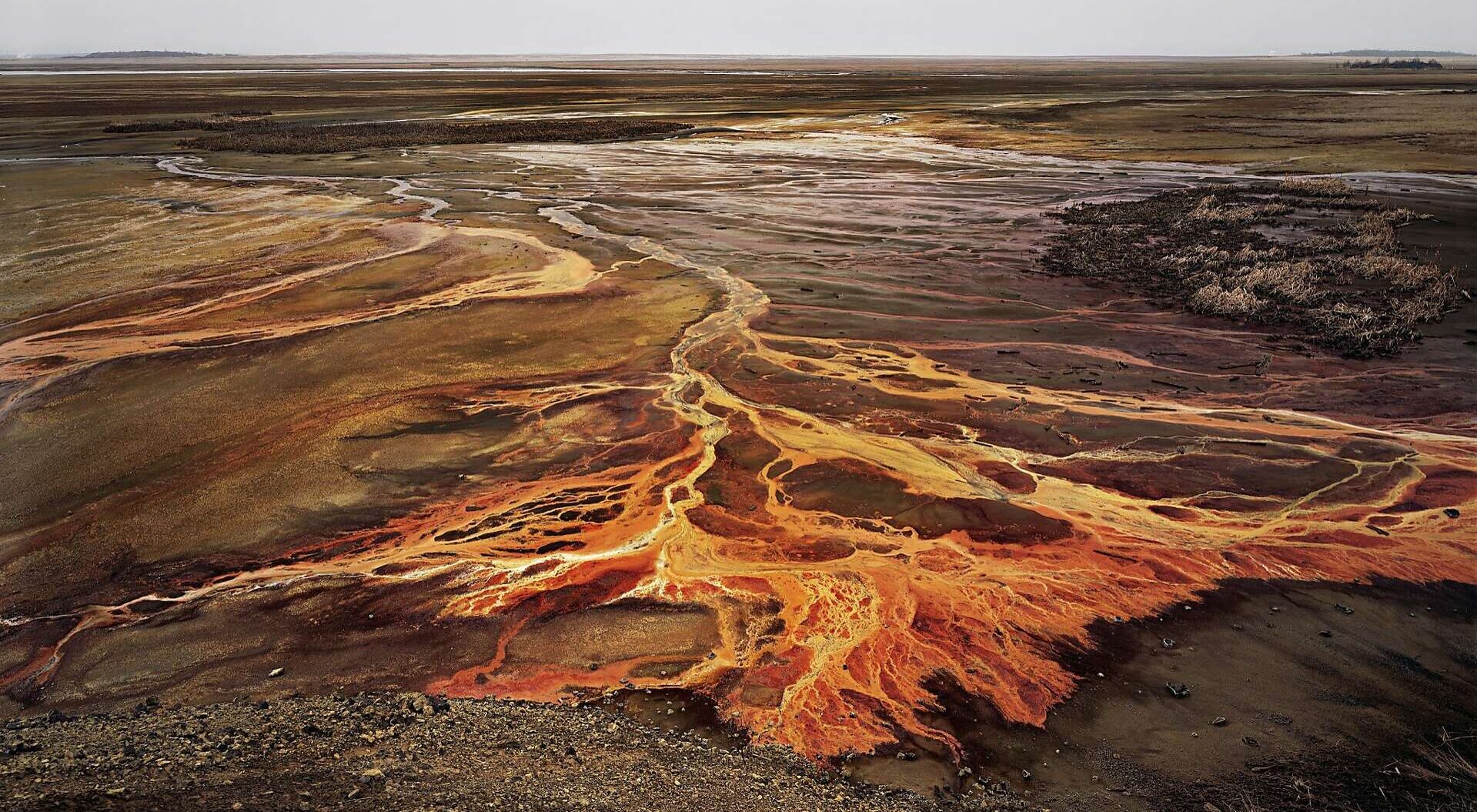


One idea that stayed with me is the question of who is actually responsible for the environmental changes we see today. The term “Anthropocene” suggests that humanity as a whole has become a force capable of changing the planet. At first, I thought this idea made sense because humans have clearly altered landscapes through mining, industrial farming, urban development, and the use of fossil fuels. However, after reading the assigned texts, I started to wonder whether the term is too broad.
What stood out to me most was the argument that environmental destruction is not caused equally by all people. When we say that “humans” are responsible, it can hide the fact that certain industries, corporations, governments, and economic systems have had a much larger impact on the environment than ordinary individuals. For example, many of the artworks and examples discussed in the readings connect environmental damage to extraction, colonialism, and corporate interests. These examples suggest that climate change is not simply the result of human existence, but of specific choices and systems that have shaped the modern world.
This made me think differently about environmental responsibility. If everyone is considered equally responsible, then it becomes harder to identify who has the power to make meaningful changes. A person who recycles at home does not have the same environmental impact as a major oil company or a large industrial operation. The idea of the Anthropocene can therefore be useful because it reminds us that humans affect the planet, but it can also be misleading if it ignores differences in power and responsibility.
I was also interested in how art helps reveal these hidden connections. Scientific data can show that environmental problems exist, but art often helps us understand the social and political stories behind them. Some of the artworks discussed in the readings make visible the links between environmental damage, economic systems, and historical events. In this way, art encourages viewers to ask deeper questions about why environmental crises happen rather than simply accepting them as inevitable.
For me, the most important takeaway from this week’s materials is that environmental issues are not only scientific problems. They are also questions about history, politics, economics, and justice. Thinking about the Anthropocene in this way opens up a more complicated but also more honest discussion about our relationship with the planet and our responsibility for its future.
Hey Deborah, I really enjoyed reading your comment and your take on the term Anthropocene. The wording used to talk about the toll humans have on the environment is very important, especially when trying to put responsibility on everyone equally. Not everyone has the same impact on the environment but we are somehow made to be held as equally responsible as the next person. You make a very good point that if everyone is equally responsible for the changes than it makes it difficult to identify who has the power to make meaningful changes.
Excellent, Deborah, I thoroughly agree with your assessments!
This week’s lecture was eye opening and helped get the gears moving about how humans affect the environment. The part of the lecture that caught my attention immediately was how there is no separation between humans and animals. I have always believed that there is an intertwining between humans and animals because of how much human activity can affect animals’ lives, from their environment to their population count. Even the usage of terms ‘non-humans’ feels refreshing to hear as it always seems like humans categorize themselves above animals due to this idea of superiority and advancement. I think that we naturally require the same survival necessities such as food, water, sleep, etc. I understand that on some level we have advanced in ways animals haven’t but they also hold unique abilities that are unachievable to us. There is simply no way to deny an animal’s intelligence and capabilities of advancing when dogs and gorillas can learn and understand the complex language of humans (even sign language) and we cannot communicate to them in their language. We are constantly interacting with nature and alternating it to the point it has unnatural changes. I believe this way of thinking that we are constantly intertwining with animals will refrain us from thinking we do not affect them and we barely interact.
Moving forward, the term anthropocene and reading about it does open my mind up to keep my mind open to how not just animals are affected by human activity. I think a lot of media I have consumed that discusses environmental issues pulls in the audience using animals and their suffrage to spread awareness. Visually it can be easier to gain attention on yet it might just drive focus mainly on that. Which for me personally, narrows my view and acknowledges animals more than anything. Yet while reading the readings, I was reminded about greenhouse gases, pollution, global warming, GMO’s, deforestation, extinction, etc. Even the issues invisible to us have to be acknowledged such as carbon dioxide being the reason the planet is warming. I wondered for a bit how visuals can be created to draw attention to these issues that just weren’t charts and data. The visuals are shown in one of the readings of “visualizations of the globe, showing schematic networks of light trajectories that reference and measure energy, transportation, and communication systems”.
One part of the reading that stuck with me was how human activity moves sediment and rock more than the natural process such as erosion. It made me question how much responsibility each one of us has to the changing environment. The average person can not possibly cause so much change to the environment unless given the power to do so. Large corporations can affect the environment at a larger scale unlike someone who does not have the ability to make large changes in the environment.
I really liked your point about how the term “non-human” challenges the idea that humans exist above nature. It reminded me of how the lecture and readings encourage us to see humans as part of a larger ecological system rather than separate from it. Your observation also connects to Demos’ discussion of the Anthropocene, which shows how human actions have become a geological force capable of shaping the planet itself.
What stood out to me most in your response was your question about responsibility. I agree that the average person cannot transform the environment on the same scale as large corporations or industries. This connects to one of the critiques of the Anthropocene discussed in the readings: when we say that “humans” are responsible for environmental change, we risk treating responsibility as equal when it is not. Some institutions, industries, and economic systems have contributed far more to climate change than individuals.
Your comments also made me think about the role of art in making invisible environmental issues visible. Problems like carbon emissions or atmospheric warming are difficult to see directly, which is why artists and visualizations can be so important. They help translate scientific data into images and experiences that people can better understand and emotionally connect with. In that sense, art can play a key role in expanding public awareness of environmental issues beyond what statistics alone can achieve.
I really like your idea about creating global visuals about energy, transportation systems, etc! I have seen some resources out there that help to visualize these things although there definetly is a gap in how these things are communicated to the public which should be filled. Making people more aware of these things and the impacts will hopefully transpire more sentiment and care to push for change.
Wonderful post, Gina, I especially enjoyed reading your thoughts on the purported human-animal divide, very thoughtful
After this lecture and the readings, a few new thoughts have come to mind. There were some really shocking statistics, like how humanity has transformed about 38% of the land that isn’t covered in ice into farmland. This is astounding as both a feat of human ingenuity and evidence of our immense greed. We produce so much food waste, have too much farmland, yet much of the earth lives in hunger. Many of the things I read today highlight how humanity basks in our excess. From Dubai to Vegas, we have created a system of existence so grand that it should not exist. It is incredible to live in an age where the average person, especially in Europe and the U.S, lives far better than anyone in their bloodline before them. Our ancestors could only dream of some of the innovations that have resulted from industrialization, and they could not fathom the horrors either. The readings demonstrate how the state, corporations, and military work in tandem to create an apparatus that distracts us from the horrors of the Anthropocene, instead focusing on the “great” inventions of Capitalism and companies that make our lives “better.” In art and media, it is especially important to be outwardly critical of the apparatus, lest images and art be used against us. The Anthropocene and its art have become less about humanity and more about corporations, largely due to the fact that they control the narrative. We must use our art to portray the corporations as guilty, responsible, and accountable for the destruction of our planet during this so-called Anthropocene.
Thanks for your first post, Sebastian. It’s a good start. There are lots of interesting thoughts here, but your post does feel short and slightly underdeveloped. You definitely had room to make more connections with the lecture and readings. Once you do, your posts going forward will feel more substantial.
One thing that stood out to me from this week’s lecture and readings was the idea that humans have changed the planet so much that scientists are considering an entirely new geological age. That honestly made me stop and think because we usually think of environmental changes happening naturally over thousands of years, not because of human actions. I also found it interesting that the readings questioned who is actually responsible for these changes. The term Anthropocene makes it sound like all humans are equally responsible, but I agree with the idea that large industries and corporations have a much bigger impact than the average person. While we all contribute in some way, not everyone has the same level of influence on the environment. The images and examples in the readings made the topic feel more real to me. Seeing landscapes changed by oil extraction, pollution, and development showed how much humans have reshaped the planet. Overall, this week’s material made me think more about how our actions leave lasting effects on the environment and how important it is to look at who is creating the biggest impacts.
Thanks, Stephanie. Going forward, I encourage you to elaborate more. This first post feels rather short and underdeveloped. Bring in more specifics from the lecture and the readings and write/think about them more deliberately and with greater specificity.
Thank you, Professor. I will definitely elaborate next time.
One idea that continued to interest me after the lecture is the way the term “Anthropocene” can sometimes hide the unequal distribution of responsibility for environmental damage. The Anthropocene is often described as the age in which humans have become a geological force capable of altering the planet. While this concept is useful because it emphasizes the scale of human impact, I think it can also be misleading because it suggests that all humans have contributed equally to climate change and environmental destruction.
This issue is raised by T. J. Demos, who argues that the Anthropocene risks becoming a universal category that obscures histories of colonialism, industrial capitalism, and uneven resource consumption. When I considered the artwork discussed in the lecture through this lens, I began to wonder whether the work is really about “humanity” in general or about particular economic and political systems that have transformed the planet. This distinction seems important because the causes of climate change are not evenly distributed across populations, and neither are its consequences.
What I find particularly compelling about climate-related art is that it can make these hidden relationships visible. Geological records often appear objective and neutral, as discussed in Fowkes’ text, but artists frequently reveal the social and political stories embedded within those records. A rising carbon level, a polluted landscape, or a disappearing ecosystem is not only an environmental fact; it is also evidence of historical decisions, patterns of consumption, and structures of power.
This raises an interesting question about the role of contemporary art in the Anthropocene. Should artists focus on representing environmental destruction, or should they focus on exposing the systems that produce it? In many cases, the most effective works may be those that do both simultaneously. Rather than simply showing the effects of climate change, they encourage viewers to think critically about who benefits from environmental exploitation and who bears its costs.
For me, this perspective transforms climate art from a form of environmental awareness into a form of political inquiry. The artwork becomes less about documenting a crisis and more about asking viewers to reconsider the economic and social structures that have produced the crisis in the first place. That shift makes the work not only aesthetically powerful but also politically significant.
Excellent post integrating the readings, Ena, I enjoyed reading and totally agree with your thoughts on ecological politics and responsibility.
What I found most compelling in this lecture was the argument that the domestication of animals and plants is a foundational driver of the Anthropocene. Climate change is not a purely industrial problem, but something that begins much earlier, with the very act of humans reshaping other species to serve our own needs.
What strikes me is how total this process has become. Almost no food crop or domesticated animal exists in a truly “wild” state anymore, and many were themselves bred from earlier domesticated forms. There is very little that is ecologically “pure” left. This raises an uncomfortable question: if domestication is so deeply embedded in what makes us human, can it ever really be undone?
This also made me think about scale and individual responsibility. The logic of domestication operates at every level, from industrial agriculture down to a smallholder keeping a few animals. Even small communities living closely off the land participate in the same cycle, just at a much smaller scale. There is no getting outside it, which feels important to sit with rather than dismiss.
It also raises the question of solutions. This caused me to research ways to solve this, for example, through modern regenerative practices, biotechnologies, and more, which I have no idea how they work lol.
Your comment is very thoughtful. The way we evolved as a civilization was impossible without bending nature. It’s hard to imagine how different humanity would be if it had gone a different way. You might like to know that there are good ways we are changing things right now. I recently saw an article about a lab that’s breeding coral species resistant to climate change.
Thanks, Matthew, interesting focus. We’ll get into these matters in far greater detail in the upcoming ANIMALS lecture (and the PLANT POLITICS lecture much later in the semester), so stay tuned!
If I personally would have to decide at what point in time the Anthropocene starts, I would go back to the point where humans started to work on the land and develop crops. I feel like that’s the first time we alter nature to our own liking. Over the years of artificial selection, the plants have changed, but they didn’t evolve to survive better; they changed to suit humans more. I would be sceptical of attaching environmental changes to capitalism, as it seems clear to me that humanity started to change the landscape around itself thousands of years before capitalism or corporations came around. However, on different parts of the Earth, the changes were taken to a different extent. What I find interesting now is whether the cultures that don’t perceive a human being as an animal are Christian or Abrahamic. It seems a lot like in the Bible, humans are not the same as animals or part of nature; they are created in the image of God, and they are above nature. Adam even gets to name the animals in Eden. When it happened to be Europeans who colonized a large chunk of the world, it would make sense that with the spread of Christianity, they also spread this condescending attitude toward nature and the environment. I’m really excited to learn how culture, colonialism, and environment intersect in this class. I feel like colonialism will be part of the conversation at some point, especially because we already know that one of the ways to calculate the start of the Anthropocene might be colonization of the Americas. I also wonder if there was anything like the theory of evolution in indigenous cultures before Darwin. I know that fundamental Christianity doesn’t really go along with his theories, but if other cultures are more in touch with nature and understand a human as an animal, the theory of evolution wouldn’t be so shocking to them.
Outside of the historical background of our course, I absolutely loved Ernst Haeckel’s illustrations. After I listened to the lecture, I went online to see some more of them. These are the kinds of very detailed, very realistic illustrations that you can look at for a really long time. His little marine critters have a slightly vintage, surreal feel, where he’s using somehow very saturated but muted colors at the same time. They remind me of looking through the images of a biology textbook in middle school, particularly about illustrations of hydras and their lifecycle.
I feel like you made a really interesting point about religion adding to the binary between human vs. (non-human) animal and I like that you gave the example of how in Christianity, man was formed in the ‘image’ of God and Adam was the one who named all the animals. I feel like Western civilization has definitely struggled with trying to reconcile where humans fit in between animals and divinity for a long time.
Wonderful first post, Anna, so clear and focused (I too love those Haeckel drawings!)
Wow, this was a very enlightening lecture to begin with. Coming from an environmental science and art background, I find the two questions asked at the end to be very important. I believe art and environment are very much interconnected (in a more natural way then how human history and geologic history are now colliding), nature is art. So many of the patterns and colors we use in art are inspired/taken from nature. And if we are nature as well, as living breathing members/animals of the global ecosystem, is what we create nature as well?
To answer the question (from the video) I think the most compelling way that art practices can engage with the environmental crisis we are facing currently is by creating pieces that are interactive and let us know what is going on in the world around us and how it is all connected. Kind of like a digital globe that is being updated about how different parts of the world have changed/are changing and also what solutions are possible at the individual level, political level, policy level, and company level to combat the crisis.
I also think what was mentioned about the different stages of the start of the “anthroposcene” was very eye opening. Beginning with the neolithic evolution then the new world colonization , industrial revolution, and the atomic bomb detonation coating the entire world with radioactive material. It really is so symbolic almost as if it’s some sort of a movie, as we know life does imitate art. This sequential progression kind of makes me think of this question I often think of: where does every generation experience worse socio-political/environmental challenges? It seems to have hopefully reached its peak for where it is currently at. Although, then you also have to take into account the progressions we have also made especially in terms of women’s rights, slavery, and more (of course not perfect and complete resolutions to these issues). But it’s so undeniable how all these issues connect, how oppression is so interconnected the way animals, nature, climate, environment is.
The environment seems to be paying the price for these wrong doings, it’s some sort of a punishment to the world for what its inhabitants are doing. It quite literally is a consequence to bad actions some more direct than others. Such as burning fossil fuels vs forcing people in poor countries to mine for materials while being paid unlivable wages and inhumane working conditions.
I also found the part where it was mentioned that a small island in Asia likely doesn’t produce much emission but is much more impacted by the environmental cost of these emissions that are mostly being produced by countries like the UK, China, US; to be a very important point as well! As an environmental scientist myself, this disparity was actually the thing that impassioned me toward the field. It’s such an upsetting reality because how do you right this, how do you begin to stop this? If colonialism in its more physical form wasn’t enough with the killing, looting, enslavement, and all the other horrific things. Now this is another issue that is much harder to patrol and hold accountability over due to the political barrier in place. Now children, women and men who are suffering the after effects of colonization or current effects have to deal with another issue where every environment they live in is unlivable for them. With rising temperatures, heat waves, fires, coastal erosion, coastal flooding, heavy rainfalls, glacier runoff, drought, and so much more are added to their burdens.
It really is kind of sad and aggravating to think about these things put together but it is necessary to think of solutions and art can pave the way for these solutions by getting us to create.
Super thoughtful first post, Aisha, so happy you found this first lecture interesting…
One idea that I found interesting from the readings was that although ‘anthropocene’ has become a widely recognized and now used term among scientists and geologists, geologists have varying opinions on whether the official start of the anthropocene is behind us or ahead of us — and whether or not it will leave a lasting imprint visible within the stratification of the earth’s geological record millions of years from now. These huge, significant climactic impacts and changes throughout human history caused by our actions may one day be barely noticeable in the geological record millions or billions of years in the future. There was a passage in “Enter the Anthropocene” by Elizabeth Kolbert which read, “Probably the most obvious way humans are altering the planet is by building cities, which are essentially vast stretches of man-made materials — steel, glass, concrete, and brick. But it turns out most cities are not good candidates for long-term preservation, for the simple reason that they’re built on land, and on land the forces of erosion tend to win out over those of sedimentation. From a geologic perspective, the most plainly visible human effects on the landscape today “may in some ways be the most transient,” Zalasciewicz has observed.”
This passage reminded me of some posts I was reading today on a blog, where the blogger shared that one of her “hottest takes” was a theory that dinosaurs could use tools and had access to advanced technologies and nuclear power, but got into wars with one another and eventually destroyed themselves and all evidence of their civilization through nuclear war. Someone asked them a follow-up question about how continental drift would play into this theory, and she responded by saying that it can be assumed that continental drift would have destroyed any remnants of the buildings and great roads the dinosaurs had built, and any surviving mammals would lack the knowledge to preserve their infrastructure. Although I’m not sure how scientifically sound this theory is, or if I would personally adopt it, it’s a fun science fiction concept to consider and it really reminded me of that passage in the reading about how erosion would eventually destroy all traces of these massive buildings and skyscrapers and man-made cities we have sprawling across our planet, that seem so permanent to us on our tiny human time-scales, but are actually extremely ephemeral on a geological scale.
On a heavier note, one other thing that stood out to me from the lecture/readings this week was the relationship between colonialism/conquest and human impact on the environment, and it reminded me of something that I read once about how the trans-atlantic slave trade actually heavily impacted the migratory patterns of sharks across the oceans of the world because of the sheer volume of enslaved people’s bodies thrown into the sea. 🙁 Scientists studying the seabed along slave trader routes have also found increased levels of iron in the sediment from chains and shackles which would have impacted PH levels and the biology of the ocean as well.
Wonderful first post, Samihah, I enjoyed reading! That dinosaur hypothesis sounds a bit nuts, honestly, but makes for great science fiction (spoiler alert: it’s actually very much like the plot twist that comes at the end of the original The Planet of the Apes (1968), totally classic!). All three of your paragraphs/points-of-interest here were really interesting to think about.
The term Capitalocene feels more accurate to me than Anthropocene because it brings to my mind an important difference, large profit-driven industries are more responsible for the environmental destruction, but still it is often marginalized communities who barely contributed to the damage that suffer the consequences of it. That said, I think there is also a certain degree of responsibility on the rest of us, indifferent consumption and the passive acceptance of existing social orders and hierarchies make regular people somehow responsible too in the continuation of abusive practices against nature, animals, and vulnerable human communities.
This indifference is not accidental though. Capitalism has always reinforced it by putting the individual over the community, a sale point that serves as the base in the marketing of virtually every product and service out there, which often prioritizes personal desire, identity and self-improvement rather than collective wellbeing. This fractures us as a community and makes solidarity harder to achieve, which ultimately benefits the interests of the same industries that cause the damage.
To me, the deeper problem is cultural. Meaningful resistance would require a level of collectivity and unity that currently we just don’t have, partly because modern society has lost its relationship with the natural world. Many Indigenous and traditional cultures maintained that relationship through songs and rituals, these practices helped them to cultivate genuine gratitude and respect for the environment. Today those practices are gone, and without a common understanding of what nature means and why it matters, building the kind of solidarity that real change requires feels kind of impossible. I think here is where art can make an impact by helping to build awareness and community.
Thanks, Gg, I tend to agree that the “Capitalocene” is the more fitting term, but “Anthropocene” really rolls off the tongue and sounds more neutral/scientific (which is probably why it’s caught on)
I think it’s important to be critical of Western biases and binaries, especially this one Professor Gerspacher is critiquing in his lecture. Of a separation between Human And non-human, culture and nature, human history and geologic history. This isn’t necessarily a new concept for me- especially since reading the book ‘Braiding Sweetgrass’ by Robin Wall Kimmerer- a Potawatomi woman and botanist- It’s her personal narrative that explains the relationship between humans and plants pretty beautifully. It is also critiquing western frameworks on how we identify and talk about plants.
I liked how it was mentioned that this binary is primarily western and many cultures, and Indigenous communities do not abide by those standards. I do think, however, starting this course with the history of ecology- a western science in some ways, though critiquing it, perpetuates an anglo-centered history. Teaching a history that only ‘starts’ when white people are involved. Humboldt was late to the game in many ways and learning about this German guy- being the “father” of something other cultures have known about since way before- is such a standard pattern of history- that makes me more frustrated than curious about him.
I think learning about how humans are part of our ecosystems, the living world- can be a spiritual thing- and comforting. There’s one example I think of in Kimmerer’s book when she recalls an experiment she and a student conducted to figure out how best to harvest sweetgrass. They had control plants that were left alone, plants harvested using a traditional indigenous method, and plants harvested by pulling them out of the ground. The results were that there was no significant difference between harvesting methods- but what they discovered is that the neglected plants, the ones not interacting with humans, were in decline. The relationship between humans and nature is not inherently extractivist- which is an idea I needed to hear- after feeling like the irreparable damage to our earth was too large a sin to forgive. Humans are not solely parasites on earth destroying its resources- we too are part of nature, and meant to be here. There is a false notion the world would be better off without us- but that separates us from the world- and when we acknowledge our interconnectedness I think it creates a different sort of care/empathy towards nature.
I’d like to learn more about African spirituality in environmental contexts as well- and art like ‘Deep Down Tidal ‘(2017) by Guianese artist Tabita Rezaire mentioned in the ‘Geological Records’ reading. I also thought the geological lens in that reading was fascinating- It is crazy to think about the vastness of history, and how many cycles of life have come before us- I think that concept is also somewhat reassuring- that life, the earth, will prevail, even if life as-we-know it does not.
Wonderful first post, Zea. I have yet to read it, but I know that Braiding Sweetgrass is basically already a classic, hopefully I’ll get to it this summer! Great outside reference for the class to have. I might defend Humboldt just a bit, he was an interesting figure, but point well-taken that yes, focusing too single-mindedly on the history of ecology as Western is a short-sided thing to do…
…Deep Down Tidal is definitely an interesting work, which could be added to our discussion leadings. It’s readily available on line to watch. If you’d like to do that instead of the art work you’ve already chosen, just email me!
As I started the readings for this week, I was immediately reminded of my high school science classes on pollution and even my social studies classes when learning about the industrial revolution. However, this was different as it was nothing to what I have taken in college. I took a class in environmental science but this is a different way of putting things into perspective.
Reading about the Anthropocene was definitely something that at first I thought I was already family with, however, what I got from the readings is that the Anthropocene actually goes against traditional art interpretations of landscapes. That is to say, landscapes have always been depicted as nature’s beauty and not anything that is manmade.Yet, the more I read, the more I started to think of man-made landscapes. Something as beautiful and admirable like central park to even manhattan island being made larger. The saying of not believing everything you see comes to mind as we humans leave our traces on this earth.
While my first thought was more on science I have come to a realization of how modern art can now be seen as a documentation of earth’s evolution over time. However, this evolution is not a natural evolution like it was at one point. And while I, like many others might agree, think that of course the environmental impact is a very negative one, We are documenting progress at the cost of our futures. This creates a juxtaposition. I remember watching News 12 New York episode on Central park and how the trees create an oasis and great for the environment especially in a city like New York. However, the creation of Central Park has a lot of negative consequences to our po;pukayion as well as the environment. Yet. all the artwork depicts a central park as the glorious amazing park that is known to be.
Just like we use various works of art to study past civilizations, the Anthropocene allows for us to have that evidence to study the earth’s natural landscape. Another example is Dubai. There are many images where we see before and after. Now we have these amazing skyscrapers but before it was a desert land which in its own right is very beautiful.
Growing up, I have been fortunate enough to be in a time where we are now becoming more environmentally aware of the damage that we as humans have been creating throughout time. While progress is beautiful, we have been blindsided by technology and what was once nature is now manmade. So yes science can explain how climate change works but it is a social and historical problem that causes all this. And art proves that art can also be used to protest such actions and depict the consequences.
Nice first comment, Lisa, your voice and experiences really shine through
As a person who is already somewhat versed in environmental issues because of personal interest, much of these texts were a nice refresher. What did strike me was you mentioning “Don’t Look Up.” I remembered loving that movie when it came out, as well as being shocked by public reception. It wasn’t nominated for a single Oscar, yet the Oscars made sure to make several biting comments on it. This makes me consider how the public, and certainly powerful individuals continue to view environmental issues; something preachy or whiney that doesn’t truly affect them.
It was interesting to see anthropocene start was a word in literature rather than a scientific term, as we’ve clearly noted significant human impact on the environment since 1988 at the very least. It was as if humanity simply threw their hands up until it was too hard to ignore, much like “Don’t Look Up.” Although I do believe a handful of humans are largely responsible for how severely our climate is changing, I am content with the term anthropocene, as we cannot eliminate everyone down the line profiting from ignoring these people in charge. We as a people continually vote against public protections for the environment, or pollution reduction bills. Although several thousand people spearhead the issued, several million people benefit, which means that several billion will suffer. We cannot simply place the blame on executives when our system on every level continues to keep people uneducated and uninformed about the full effects of climate change.
I recently read The Grapes of Wrath, and I found it to be a very pertinent story to our current environmental issues. The fields had become largely untenable for sharecroppers, to the point that the banks decided to switch to ploughs despite the issue being the dirt. Everyone was doing what they could to profit and make an extra buck off the sharecropper suffering, even some sharecroppers themselves. So many suffered and went hungry, people crossed picket lines, because as long as they had theirs, nobody else mattered. This very human (and capitalist) attitude has sunk our ship when it comes to creating meaningful policies and reversing climate change. Even though there are those far more responsible than us, if we don’t start the change, no one will.
With this, I am perfectly fine with the term anthropocene. A name won’t change whats happening, but smaller changes at the community level will eventually take over a public conscious.
Thanks for your first post of the semester, Nina. It’s compelling, especially the connections you make on Don’t Look Up‘s reception and Steinbeck.